
At Team Rubicon, readiness doesn’t begin when a disaster hits; it begins long before the winds pick up and the headlines break. For that reason, every year, Team Rubicon conducts a hurricane response exercise that prepares volunteers, staff, and partners to respond quickly when major storms threaten communities.
Hurricane response exercises allow disaster relief organizations to test emergency plans before hurricane season begins. By simulating landfall, logistics, communications, and volunteer deployments, organizations like Team Rubicon can identify weaknesses, improve coordination, and respond faster when real storms strike.
While we believe that preparedness helps every community better weather disasters, we also believe that preparedness for disaster season helps our nonprofit respond faster, be on the ground sooner, and begin serving survivors more quickly when a disaster does strike. Readiness turns reactivity into recovery.
That readiness was on full display early this summer as Team Rubicon activated its Emergency Operations Center (EOC) for the 2026 HURREX—shorthand for “hurricane exercise”—our annual large-scale exercise designed to simulate the complexity, pressure, and pace of a real-world hurricane response.
How the Hurricane Response Exercise Strengthens Disaster Readiness
Beginning Monday, June 8, teams across our organization stepped into a scenario that was centered on a tropical storm that had developed and was tracking toward both the Caribbean and the U.S. Gulf Coast. While the storm—a theoretical Category 4 Hurricane that wrought damage to multiple Caribbean Islands and was on track to make landfall on the Gulf Coast—was a simulation, the response was anything but. Although it was a simulated hurricane operation, everything came alive. From the EOC floor to the theoretical field, Greyshirts, staff, and teams across multiple regions worked through the same decision-making processes, coordination challenges, and operational demands they would face during a real-world disaster.
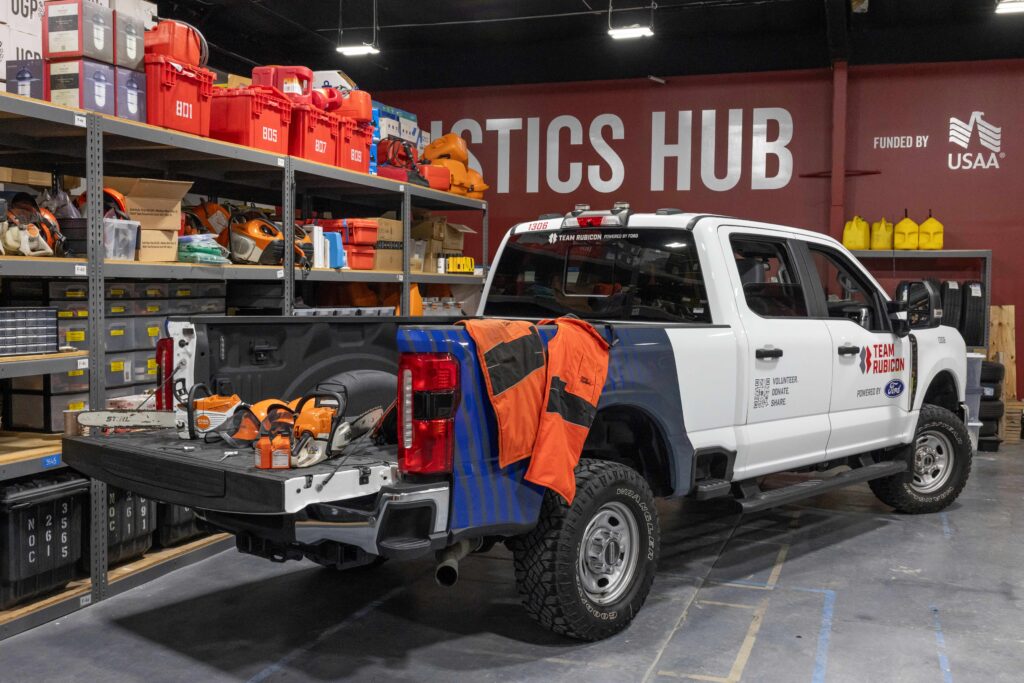
Inside the EOC, the tempo was electric. Teams composed of members of the Operations team monitored the storm’s progression, assessed potential impact zones, and began aligning resources for potential deployment. Logistics personnel mapped out what equipment would be needed for route clearance and a response, and monitored the vehicle movement as they staged route clearance teams and response trailers. Operations teams prepared reconnaissance and route clearance strategies. Communications teams developed situation reports and media messaging in real time, ensuring that as the scenario evolved, information moved just as quickly as the storm itself.
Across the simulated impact zone, response capabilities came online in parallel. Domestically, Route Clearance Teams staged in advance of landfall to restore access for emergency responders. Recon Teams prepared to assess damage and identify needs across affected communities. Internationally, our operations team coordinated medically-trained volunteers for potential deployments to support local health systems on two Caribbean islands. Each piece of the operation, whether in the field or in the EOC, was designed to stress the system in a controlled environment, revealing both strengths and opportunities to improve.
Corporate Partners Join the Hurricane Response Exercise
HURREX may serve as a means of breaking the system, identifying weak points in our hurricane response protocol, and fixing them before the season comes into full gear, but the annual exercise has also become a proving ground for how Team Rubicon works beyond its own organization.
This year, corporate partners were embedded directly into the exercise, observing and participating in how decisions are made, resources are allocated, and operations are executed. USAA’s Catastrophe (CAT) team, which consists of specialized property and auto adjusters who are rapidly deployed following major disasters to evaluate and settle damage, integrated with the team planning our response and shared their resources, like satellite maps.
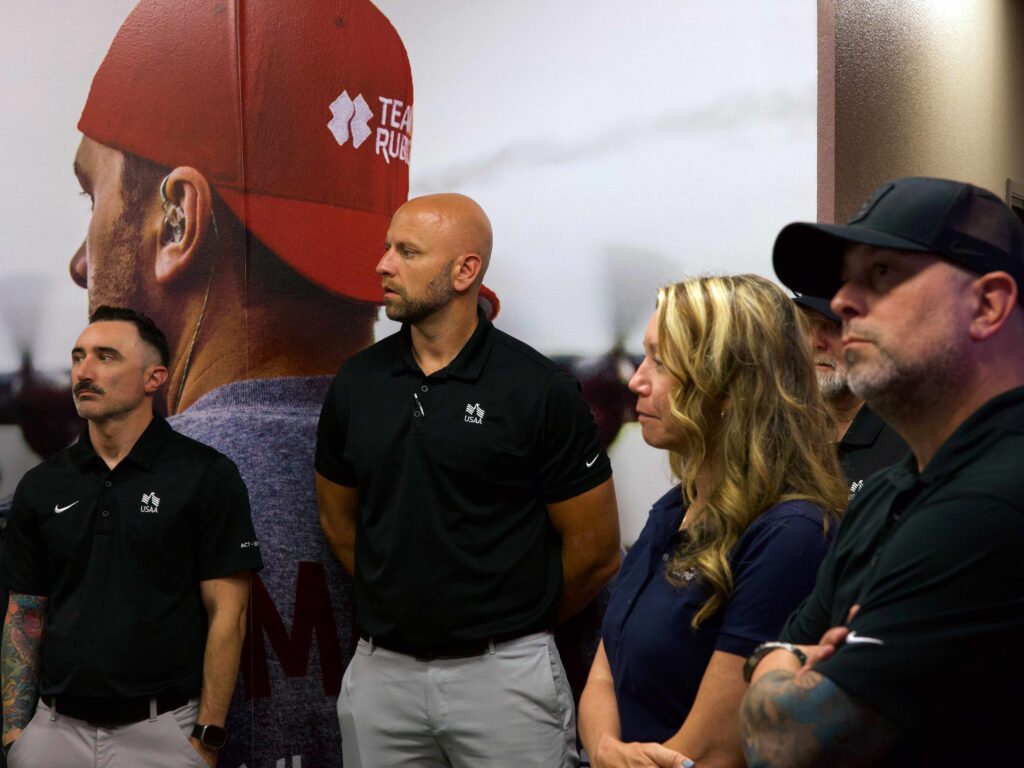
Ford also attended to better understand our response process, and to evaluate how our two organizations—and especially Ford’s local dealer network—could work together in the immediate after a disaster.
This kind of integration reflects a broader shift in how disaster response works today: it is no longer siloed. Effective response requires coordination across sectors, and HURREX provides the space to practice those relationships before they are needed in real-world conditions.
Lessons Learned from HURREX 2026
What makes HURREX particularly valuable is not just the scenarios it presents, but the evolution it represents. Earlier versions of the exercise exposed growing pains, with questions of ownership, coordination, and communication that naturally arise as organizations scale. Over time, those lessons have been incorporated into a more mature and unified approach to response. Today, the exercise reflects a team that understands how to move faster, communicate more clearly, and align efforts across a complex operational landscape.
That evolution is critical because disaster response is increasingly defined by speed. The ability to move resources before impact, to position teams ahead of need, and to transition seamlessly from readiness to response can mean the difference between the delayed assistance of reaching survivors days after a disaster and the immediate relief of being on the ground hours after a storm passes. HURREX allows Team Rubicon to rehearse those transitions, turning what used to be reactive steps into proactive movements.
As the exercise concluded, the work didn’t stop. Teams conducted “hotwashes,” reviewing what worked, what didn’t, and where improvements can be made. Those insights will feed directly into future operations, ensuring that when a disaster strikes, we operate with maximum efficiency for maximum impact. They will also ensure that each iteration of HURREX strengthens the organization’s ability to respond when it matters most.
Ultimately, HURREX is not about the exercise itself. It is about the communities that will one day be in the path of a real storm, and ensuring that when that moment comes, Team Rubicon and its partners are already ready to respond.


