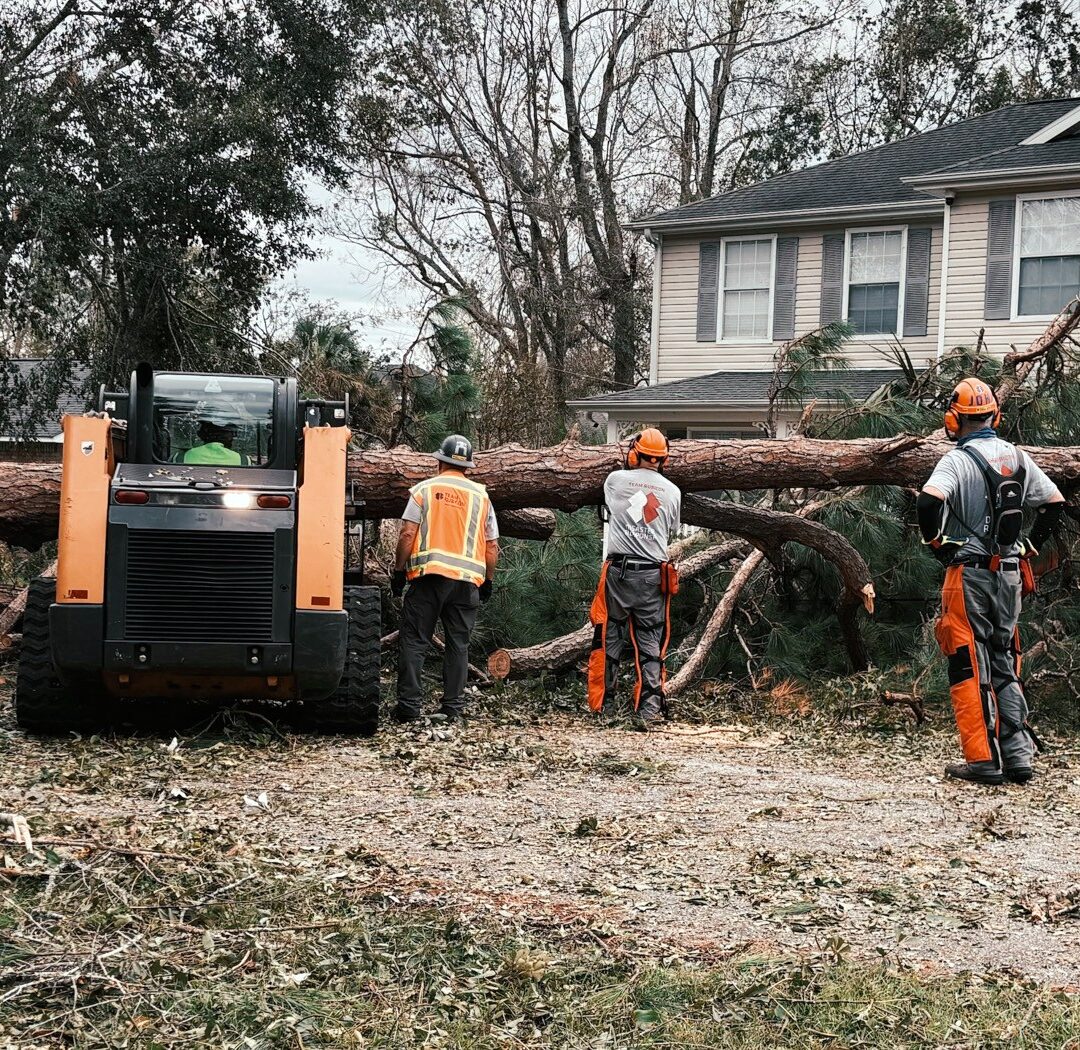

By October 1, 2026, veteran-led disaster relief nonprofit Team Rubicon had already launched more disaster responses than it did in all of 2025. It had responded to hurricanes, wildfires, tornadoes, and even volcanoes, putting disaster relief volunteers—known as Greyshirts—in the field everywhere from Alaska to Venezuela.
Every single one of the Greyshirts Team Rubicon deploys has to travel to get to those disaster zones. For some, the journey is a short day trip from home, but many others fly across the country—or the world—to reach communities in need. That’s particularly true when disasters strike rural or remote areas, where Team Rubicon may not have a large local volunteer base.
Enter Team Rubicon’s volunteer mobilization effort. When disaster strikes, Team Rubicon matches trained veteran and civilian volunteers and their capabilities to the needs of an operation. Early on, that might mean sawyers or heavy equipment operators. Later, it could mean Greyshirts who muck out homes, remove debris, or help communities through the longer work of recovery. Volunteer mobilization leaders identify these trained volunteers, confirm availability, coordinate travel and logistics, share mission information, and get the right Greyshirts into the field at the moment they are needed most.
Matching Speed to Need
Beginning in 2027, volunteer mobilization gets a lot more fluid, thanks to a $2 million investment from longtime partner Wells Fargo Foundation. The partnership is nothing new: Wells Fargo has supported Team Rubicon since 2020, and especially the nonprofit’s Ready Reserve Fund—flexible funding that allows volunteers to respond wherever need emerges, including disasters in rural, remote, and underserved communities that may never command national attention.
What is new is Wells Fargo Foundation’s support of volunteer mobilization. While half of the $2 million investment will continue to support the Ready Reserve Fund, the other $1 million will go directly to volunteer mobilization, strengthening the systems, staffing, travel, and logistics that get Greyshirts to communities when and where they’re needed most.
“The veteran-led volunteers at Team Rubicon are a force for good when disaster strikes,” said Anna Bard, head of disaster philanthropy and employee volunteerism at Wells Fargo. “Team Rubicon has established a standard of excellence when it comes to activating volunteers and staying through the hardest recovery period. The Wells Fargo Foundation is proud to expand its support of veterans and Team Rubicon as a way to help people get back to their homes, schools, and businesses.”
The gift and focus on volunteer mobilization is especially meaningful as the cost of airfare, lodging, fuel, and ground transportation continues to rise, making getting Greyshirts to disasters quickly after they strike increasingly expensive.
“Every hour saved getting Greyshirts on the ground means faster help for survivors,” says Team Rubicon Vice President of Operations Mike Watkins. “Wells Fargo’s support lets us invest in the systems that make that possible as travel costs rise.”
Providing Disaster Relief at No Cost to Survivors or the Volunteers Who Deliver It
Survivors aren’t the only ones who benefit from the humanitarian aid Team Rubicon’s volunteers provide. Sometimes, the Greyshirts do, too.
Ben Crowell, a U.S. Coast Guard veteran and Greyshirt since 2023, was at home in Washington state in June of 2026 when twin earthquakes struck Venezuela. Then, he got the call to deploy with Team Rubicon on the earthquake relief operation.
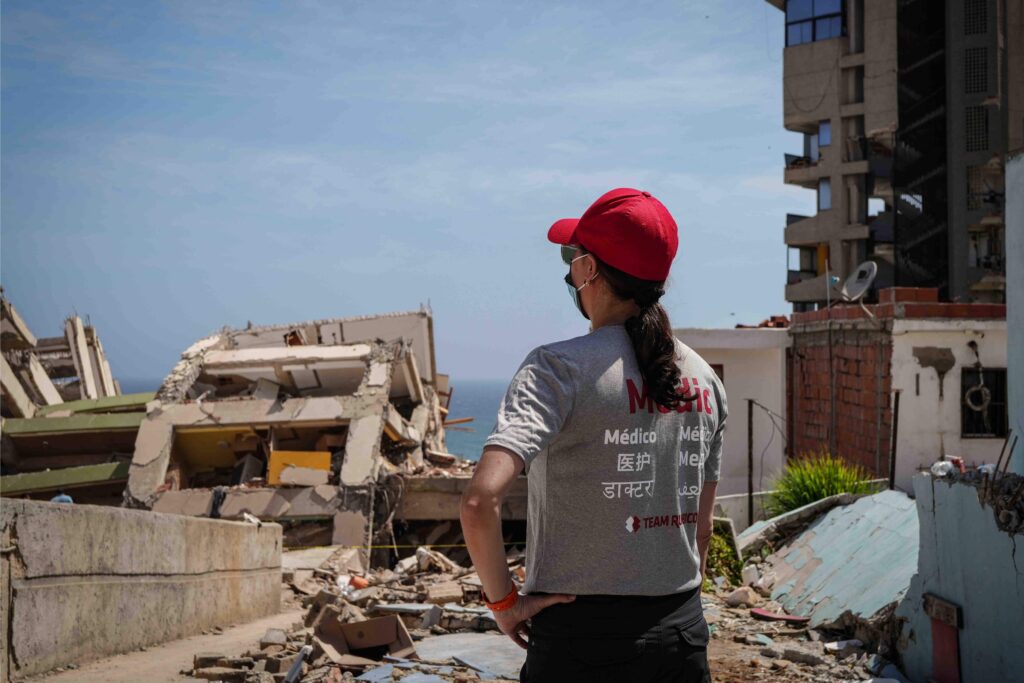
“After some extensive travel logistics, our 11-person volunteer team flew into Venezuela with 40 bags of medication, medical equipment, and personal gear for a two-week deployment,” says Crowell. A nonmedical volunteer, he played an essential support role across the course of the operation.
“It was amazing to watch the doctors and nurses work their medical magic and offer a glimmer of hope to sick and injured people,” says Crowell. “At the beginning of the journey, I had been asking myself why I was going. Why was I leaving my family and my job to go volunteer in Venezuela? The answer kept coming back to service. I was going to serve, to help, to contribute, to try to make a small difference in the lives of the people who were suffering unimaginable losses.”
That service, says Crowell, wouldn’t have been possible without Team Rubicon’s volunteer mobilization efforts. “They put responders like me into disaster zones at no cost to the survivors or me.”
Sending Veteran Volunteers to Disasters in Remote, Rural, and Often Ignored Locations
Disasters like the Venezuela earthquake may make national headlines and drive support, but many others don’t. Yet, a family whose home floods in a small town needs help just as urgently as one in a disaster zone that leads the evening news. Support for volunteer mobilization helps put Greyshirts into remote, rural, and often underpopulated areas in response to disasters that quickly fade from the headlines. These are known as low-attention disasters, or LADs. Wells Fargo Foundation’s investment in both volunteer mobilization and the Ready Reserve Fund helps Team Rubicon respond even better based on need, not attention.
The Mukluk Fire, which destroyed nearly 50 homes in the town of Tok, Alaska—population 1,600—was one such low-attention disaster. After the fire, Team Rubicon deployed 15 veteran and six civilian Greyshirts to Tok to assist with debris and hazardous tree removal, construct and assemble prefabricated temporary housing units, and support residents and community partners attempting to recover from the wildfire. The volunteers travelled from as far away as Georgia—and Haines, AK—to serve on the community of Tok.
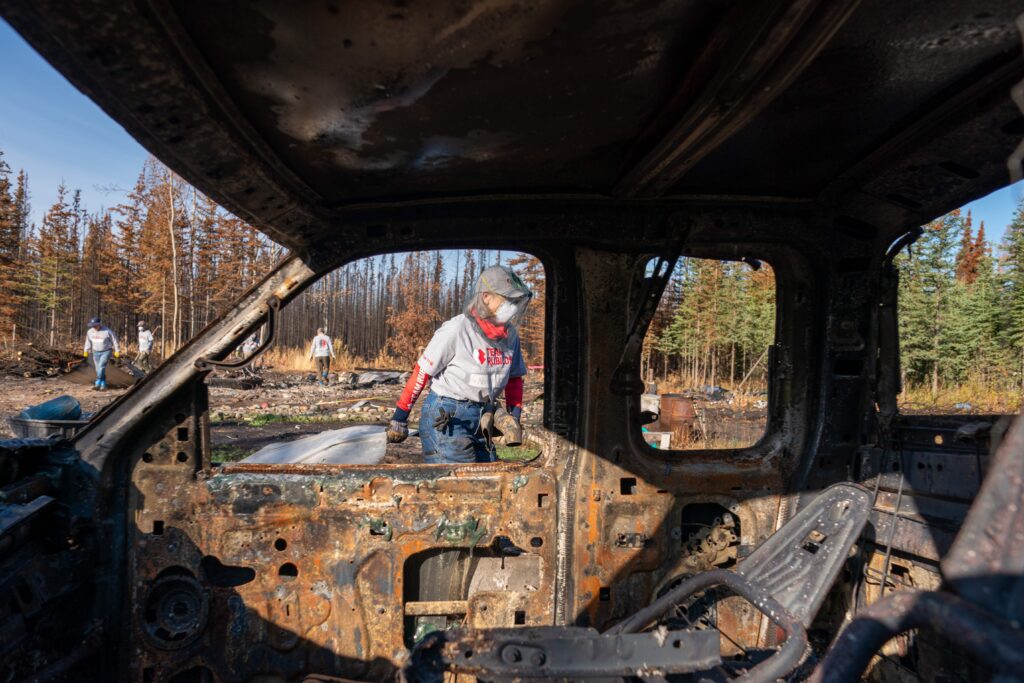
Among them was Steven Alderete, a Greyshirt from Albuquerque, NM.
“I’ve been fortunate never to be in the situation these Alaskans faced. I can’t imagine losing my home and belongings to a fire, flood, hurricane or tornado,” says Alderete. “The families affected by the wildfires needed temporary shelter before winter set in, and Team Rubicon was there to help build it. I’ve always tried to give back to communities in need, and this was a clear chance to do that.”
As an added plus, Alderete appreciated that mobilization switched the operation from two one-week deployments to a two-week deployment. Given the cost of travel to and within Alaska, he says, that decision by volunteer mobilization made complete sense.
“I’ve deployed with Team Rubicon before, but never for a wildfire, and never in Alaska. It’s a beautiful place, and the people who live there are hardworking, friendly, and deeply grateful for the help we provided,” says the Greyshirt.
Now, thanks to the additional $1 million investment in volunteer mobilization from the Wells Fargo Foundation, mobilizing and deploying veteran volunteers to disasters in far-flung and underserved places is both easier and speedier.