
On June 26, 2026, two earthquakes struck the northern part of Venezuela, killing more than 6,300 people and displacing tens of thousands. Even today, thousands remain homeless and nearly 24,000 survivors are living in state-run displacement camps.
Team Rubicon stood up an operation almost immediately after the quakes, and on July 1, the disaster relief nonprofit deployed an advance party to Venezuela to determine if we could help victims of this disaster. That team consisted of a retired senior enlisted Marine turned Registered Nurse, a former Army flight medic turned Physician’s Assistant, and a clinical psychologist who was originally from Venezuela and fluent in Spanish and English.
A few days later, I got the call to serve in Venezuela. A volunteer—aka Greyshirt—since 2023, I had trained extensively with Team Rubicon, but this opportunity to serve as a Venezuela earthquake volunteer would be my first deployment with the nonprofit.
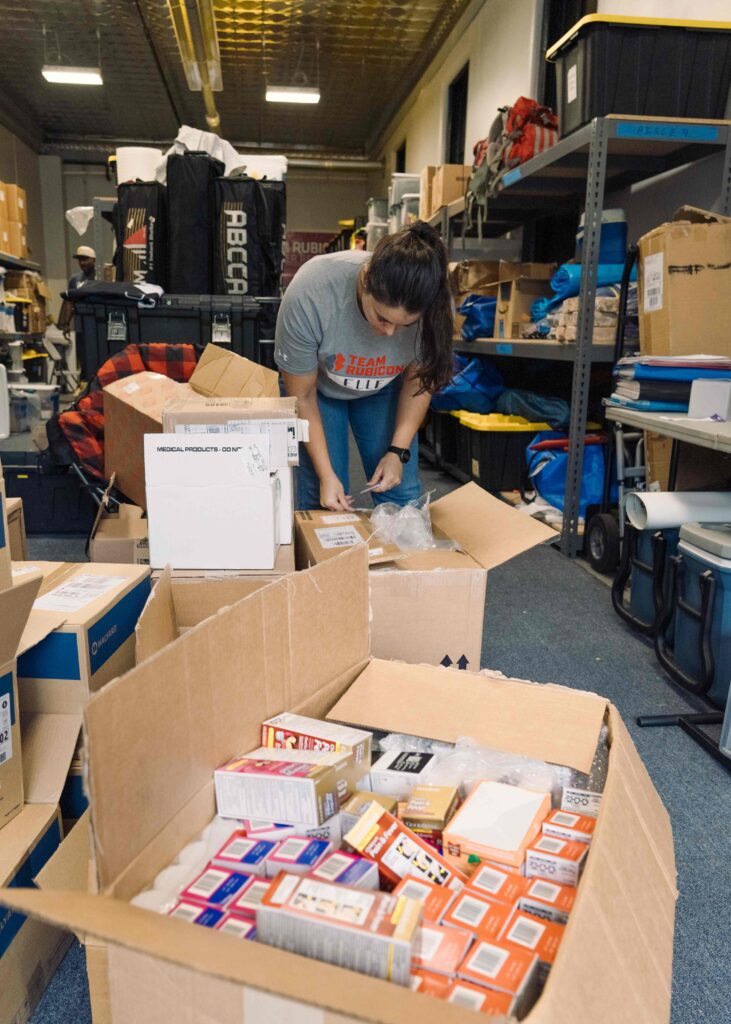
I grabbed my go bag and headed to the Tactical Operations Center, or TOC, in Chicago, where our team was rallying prior to deployment. There, we assembled the medical kits we’d be taking to Venezuela and briefed with the advance party.
After some extensive travel logistics, our 11-person volunteer team flew into Venezuela with 40 bags of medication, medical equipment, and personal gear for a two-week deployment. The team was composed of three doctors, four nurses, a Water, Sanitation, and Hygiene (WASH) specialist, and three support personnel.
Shortly after we arrived in Venezuela, the Marine-turned-nurse gave my team leader and me some really great life advice: “Don’t overthink this,” he said. “You need to treat patients, stay hydrated, and stay safe. Do those things, and it will work out.” I had to laugh at the simple brilliance of his message and tried to live up to that expectation every day thereafter.
My First Deployment as a Venezuela Earthquake Volunteer
I, personally, am not a medical provider. I was chosen for this operation in part thanks to my experience in the military—like many other Greyshirts, I’m a veteran, in my case, of the Coast Guard—and specifically to fill the assistant team leader role. In Venezuela, it would be my job to manage the movement and logistics of the team, including managing our gear, overseeing safety and security, ensuring we had food and water, coordinating with and paying interpreters, and supervising the drivers and vehicles. I would also handle a little bit of external engagement with other NGOs for logistics support and patient transports, and anything else the team or team leader needed me to do.
Once in country, we decided we would set up next to a stadium that was being used as an Internally Displaced Persons’ camp in the city of La Guaira. The stadium and the surrounding area were full of large refugee tents, where more than 1,400 people who had fled their homes had relocated.
Driving into the area, we saw collapsed and damaged buildings all around the roadway. There were also work crews and heavy equipment conducting rescue operations and removing debris from the extensive earthquake damage.
We set up our makeshift medical clinic under a large tropical tree next to the stadium. We put up a 10’-by-10’ pop-up tent for some protection from the elements, and backed a Ford Ranger with a bed full of medical supplies into the tent. This gave the medical team easy access to their equipment and to various medications we had staged in the bed of the truck. Then, we hung some signs around our area telling people where to wait and how to sign up for treatment—and just like that we were in business.
While only a few of the team members had ever met or worked together, we quickly formed a well-oiled machine. It was so efficient that we moved from seeing 15 patients on our second day there, to almost 30 on our fourth day of seeing patients, to more than 40 the day after that. On several days, we cared for more than 60 earthquake survivors in our little tent.
While the medical Greyshirts were treating patients, I was running support. Sometimes, that meant getting the things the team needed to fuel itself or to care for patients. Often, it meant meeting, greeting, and working with external parties who would stop in to say hello, such as other NGO’s, government security forces, volunteers, and anyone else who showed up. And I got to witness the work the team was doing.
A Glimmer of Hope and Some Pretty Good Medicine
As a nonmedical volunteer in Venezuela, it was amazing to see the medical professionals do their thing: they were kind and caring, while also being very efficient and effective. They freely gave their time, skill, and compassion—unconditionally—to people in need.
As I reflect on this, I think what hits me the most is that we served the survivors of those Venezuela earthquakes without any conditions or expectations: Here is help; here is a prescription; here is a shoulder to cry on; let’s put a brace on that arm or splint that broken leg.
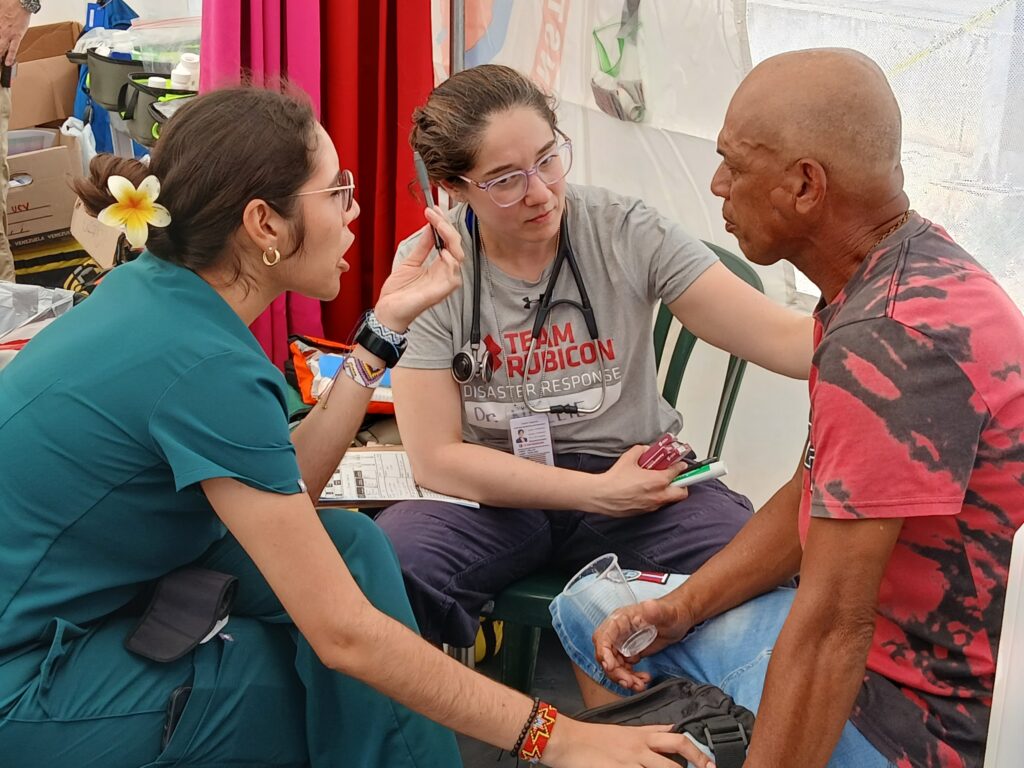
During our patient intake, there were no questions about health insurance policies, co-pays, or emergency contact information, for example. It was just getting the basics: “Who are you, and how could we help?”
It was amazing to watch the doctors and nurses work their medical magic and offer a glimmer of hope to sick and injured people.
At the beginning of this journey, I had been asking myself why I was going. Why was I leaving my family and my job to go volunteer in Venezuela? The answer kept coming back to service. I was going to serve, to help, to contribute, to try to make a small difference in the lives of the people who were suffering unimaginable losses.
As a military veteran and first responder, I have gone through various mental health challenges in my career, as we all do. Coming off of this trip, I am so thankful for the gift of service to others. I am grateful I was able to serve people in need in Venezuela and to work alongside a team of really amazing Greyshirts. I was strongly reminded that serving others is some pretty good medicine—good for the brain, good for the soul.
Most importantly, I give thanks for all that I have been given, and for how this trip made me feel about life. I leave reminded to try to bring more kindness into this world. Today, I owe a big thanks to Team Rubicon and my teammates for the impact serving in Venezuela has had on me as a human being.


