
Every Veterans Day, America gets really good at saying, “Thank you for your service.”
Restaurants hand out free meals. Social media fills up with flag graphics. Politicians issue statements. Companies roll out discounts.
And honestly, there’s nothing wrong with any of that. Veterans deserve to be recognized.
But if I’m being honest, most veterans I know aren’t sitting around hoping someone thanks them. They’re looking for a mission.
One of the biggest misconceptions about military service is that it ends when someone leaves the military. The military part ends. The desire to serve doesn’t.
For a lot of veterans, service isn’t simply something they did. It becomes part of who they are.
You see veterans continuing to serve everywhere. Veterans volunteer, coach, mentor, lead nonprofits, run businesses, serve as first responders, show up after disasters, and get involved in their communities. They raise their hand when something needs to get done.
Not because someone told them to. Because that’s what they’ve always done.
I think that’s something we miss when we talk about veterans. We spend a lot of time thanking them for what they did 10 or 20 years ago, and a lot less time talking about what they’re doing today.
And honestly, I think that’s the more interesting story.
I’ve never loved the term “Veteran Service Organization.” I understand why it exists, and there’s important work being done by organizations that proudly carry that label. But I’ve always thought there was another way to think about it.
At Team Rubicon, I often say we’re not a Veteran Service Organization. We’re a Veteran Service Opportunity.
There’s a difference. Most veterans aren’t looking to be defined by their military service. They’re looking for opportunities to continue serving. Not in the same way as before; not in the same uniform. But with the same sense of purpose.
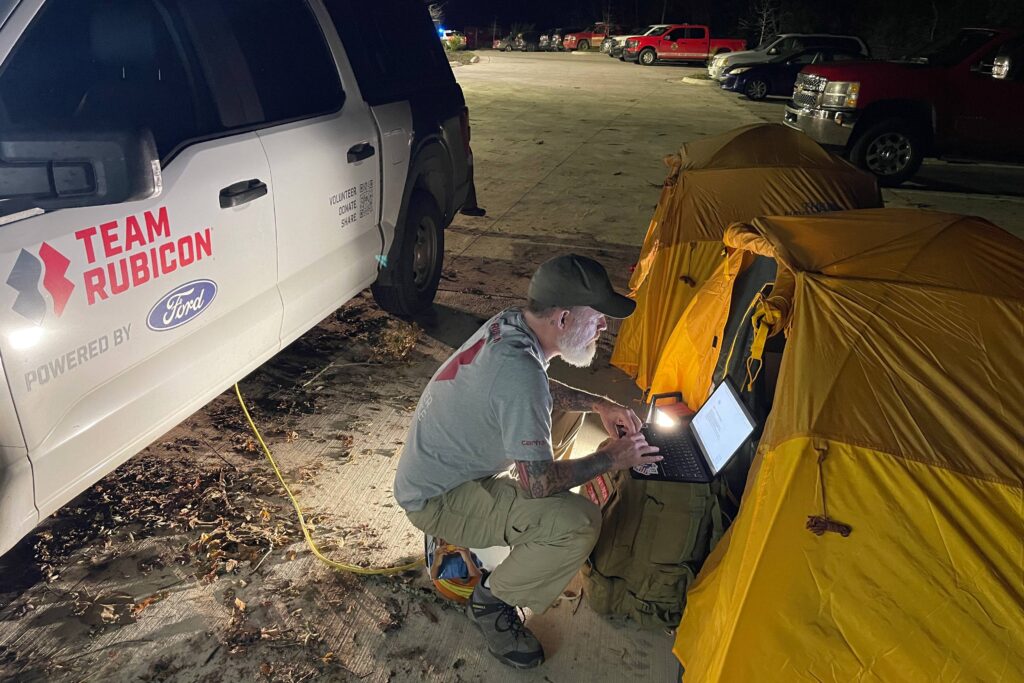
I’ve watched veterans deploy just hours after a disaster to communities they had never heard of before that disaster. I’ve seen them spend their vacation days clearing debris, repairing homes, and helping complete strangers get back on their feet.
They don’t have to do it. They choose to. Because service is still part of who they are.
The reality is, veterans don’t stop serving when they leave the military. And that’s one of the things I admire most about the veteran community. Not only what they did while they wore the uniform, but what they choose to do after they take it off.
So this Veterans Day, by all means, thank a veteran. But don’t assume their story ended when they left the military.
For a lot of veterans, the uniform comes off. The mission just changes. I think that’s something worth recognizing, too.
So maybe this year, when you stop to thank a veteran, thank them for all of their service. Past and present tense included.