
Fire doesn’t always arrive as a wall of flames moving through a forest. It can start with a forgotten pan on the stove, a space heater too close to a curtain, a spark from a power tool, a backyard fire that gets out of control, or an ember carried by a wildfire. Wherever a fire starts, fire preparedness can make a difference. That means knowing how to prevent fires, making sure your household can escape quickly, and taking steps to make your home and property less vulnerable to fire.
For people who live near forests, grasslands, or other fire-prone areas, that preparation also means understanding the wildland-urban interface, or WUI—the places where homes and other structures meet or intermingle with wildland vegetation.
Fire Preparedness Tips for Every Home
According to the National Fire Protection Association, local fire departments responded to an estimated 1.38 million fires in the United States in 2024, with nearly one-quarter of those fires occurring in home properties. These home fires caused 75% of all civilian fire deaths and injuries.
Mitigate the risk of becoming a statistic by implementing basic home fire preparedness practices, starting with the basics.
Have, Maintain, and Use Smoke Alarms
Every home should have smoke alarms throughout; the U.S. Fire Administration recommends smoke alarms inside every bedroom, outside each separate sleeping area, and on every level of the home, including the basement. Whether you’re a renter or homeowner, test your smoke alarms monthly to make sure they are working, and replace smoke alarms when they reach 10 years old.
To make things easier, stock up on a supply of whatever batteries your alarms use so that you have them handy when that reminder beep goes off.
Don’t stop at smoke alarms. Walk through your home and look for common fire hazards:
Identify Hazards in the Kitchen
Because cooking is the leading cause of residential building fires, stay in the kitchen when anything is on the stove, especially when frying, grilling, or broiling. Or turn off the stove if you leave the room.
Never use water on a grease fire. Instead, keep baking soda or salt at hand for a grease fire, and keep baking sheets or lids for pots and pans close by to eliminate the oxygen supply.
Also keep a fire extinguisher and a fire smothering blanket in the kitchen and handy.
Clear Space Around Heaters and Fireplaces
Keep furniture, curtains, bedding, and other combustible materials away from space heaters, fireplaces, wood stoves, and radiators. Never use a stove or oven to heat your home.
Keep Generators Outside
Never operate a portable generator inside a home, garage, basement, or other enclosed space. Generators need to be operated outdoors and away from doors, windows, and vents to prevent dangerous carbon monoxide from accumulating indoors. And never use a grill or stove to heat a home.
Prevent Outdoor Fires from Coming In
Outdoor fires need attention, too. Keep grills outside and away from siding, deck railings, eaves, and overhanging branches. Check local restrictions before using fire outdoors, particularly during dry or windy conditions.
Make a Home Fire Escape Plan
Knowing where the fire extinguisher is won’t help if your household doesn’t know how to get out. Create a fire escape plan before you need one. Identify two ways out of every room where possible—a primary and alternate route. Choose a meeting place outside the home where everyone can gather after escaping.
Then practice the plan at least once a year.
Keep exits clear and make sure windows and doors can be opened quickly. If you live in a multi-story home, make sure everyone knows how to escape from upper floors.
And once you’re outside, stay outside. Never go back into a burning building.
Prepare to Keep Wildfires at Bay
While local and residential fires may be the most common in the U.S.—on average, a home structure fire was reported every 96 seconds in 2024—wildfires continue to be on the rise. According to the National Association of State Foresters, more than 60,000 communities in the U.S. are at risk for Wildland Urban Interface (WUI) fires, whether due to an excess of fuel on the ground or lack of moisture.
Prepare for a Wildfire by Creating a Defensible Space Around the Home
The most significant hazard during a wildfire is windblown embers landing in, on, or next to a home. More than a decade of research shows the most effective way to protect buildings from windblown embers is to “harden” the building with fire-resistant materials, by screening vents, and by clearing flammable material from the home ignition zone, or HIZ.
If your house is near wildland vegetation, grasslands, or even a local park, creating a defensible space around the home is essential. It’s also one of the most cost-effective ways to reduce the potential for wildfire damage to a home.
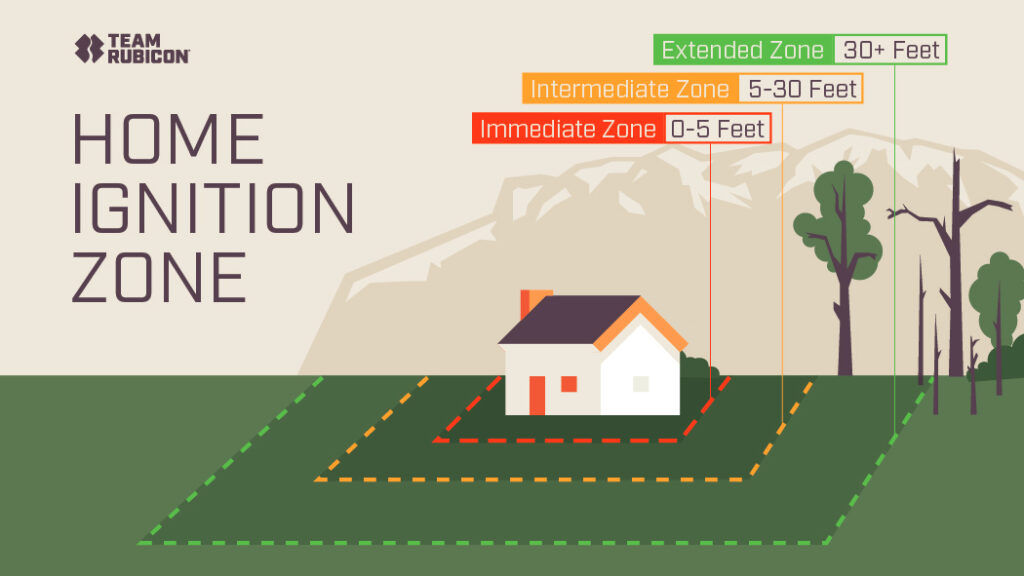
Create a defensible space in three zones around your home by reducing vegetation, debris, and other combustible materials around your home, so fire has fewer fuels to move through.
Clear the First 5 Feet
The area immediately surrounding a home is an important place to start. It’s in this area of 0 to 5 feet that the home is most vulnerable to embers.
Clear the first 5 feet around a structure—from the wall of the home out 5 feet—of combustible materials such as wood mulch, dead vegetation, pine needles, and debris. Clean leaves and other material from roofs and gutters, and keep the area underneath decks clear.
Eliminate Fuels in the 5 to 30 Feet Zone
In the zone 5 feet away from the home to 30 feet out—about the length of a stretch limo—maintain vegetation so it is healthy, spaced out, and free of dead or dying material. Keep wood piles at least 30 feet from the home when possible, and place them on bare or gravel areas, not grass or pine needles.
Reduce Combustibles 30 to 100 Feet Out
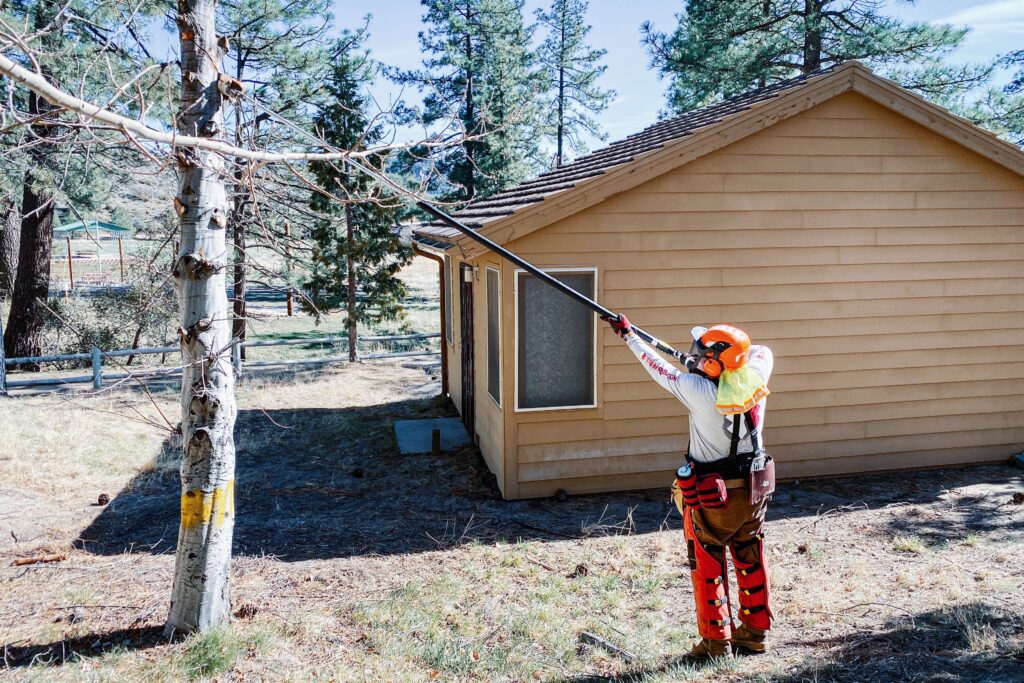
Farther from the house, reduce the amount and continuity of combustible vegetation. Thinning trees, including removing dead limbs, and creating spacing between vegetation can help interrupt the path of a wildfire.
Defensible space isn’t a one-time project. It requires regular maintenance, particularly before and during periods of heightened fire danger.
Don’t Forget the House Itself
Landscaping is only part of wildfire mitigation.
Embers can travel ahead of a wildfire and find vulnerable places on or around a home. Keeping roofs and gutters free of leaves, pine needles, and other combustible debris can also help protect the home during a nearby fire.
Look at other places where embers or flames could reach the structure, too, including on decks, fences, vents, eaves, and areas where vegetation (that wasn’t removed while creating the 5-foot defensible space) touches the house.
For homeowners in wildfire-prone areas, more substantial measures—such as fire-resistant construction materials, vegetation management, and other home-hardening improvements—may also be appropriate. The National Interagency Fire Center recommends assessing the ignition hazards and vulnerabilities specific to a home and community when developing wildfire mitigation plans.
Practice Good Fire Preparedness Before an Ember Sparks
Fire preparedness isn’t only about preventing ignition or protecting a building. It’s also about knowing what you’ll do when conditions change.
If you live in or near the WUI, understand the wildfire risk where you live, learn the evacuation routes available to your community, and make an evacuation plan.
Create an emergency communication plan. Decide where household members will meet if they become separated and how you’ll communicate if cellular service or electricity is disrupted.
Plan for pets, livestock, older adults, children, and anyone who may need additional assistance evacuating.
Keep an emergency kit ready, including medications, important documents, chargers, flashlights, water, food, and other essentials. Don’t wait until smoke is visible to start gathering what you need.
And pay attention to official warnings and evacuation orders. If authorities tell you to leave, don’t wait for the fire to become visible from your home.
Fire Preparedness is Everyone’s Responsibility
There is no single kind of fire, and there is no single fire preparedness checklist that works for every household.
A family living in an apartment has different risks from one living on a wooded acre. Someone in a dense urban neighborhood may need to focus on home fire prevention and escape planning, while someone in the WUI may also need to think about defensible space, home hardening, and wildfire evacuation.
But the principle is the same: prepare before the emergency. Check the smoke alarms. Practice the escape plan. Clear the gutters. Move the woodpile. Trim the vegetation. Know your evacuation routes.
The time to make those decisions is before the fire starts.


