

When it comes to helping your best furry friend survive a disaster, a little preparedness goes a long way. A pet emergency plan can help you figure out where you’ll go, how you’ll evacuate, who can help, and what you’ll need to keep your pet safe.
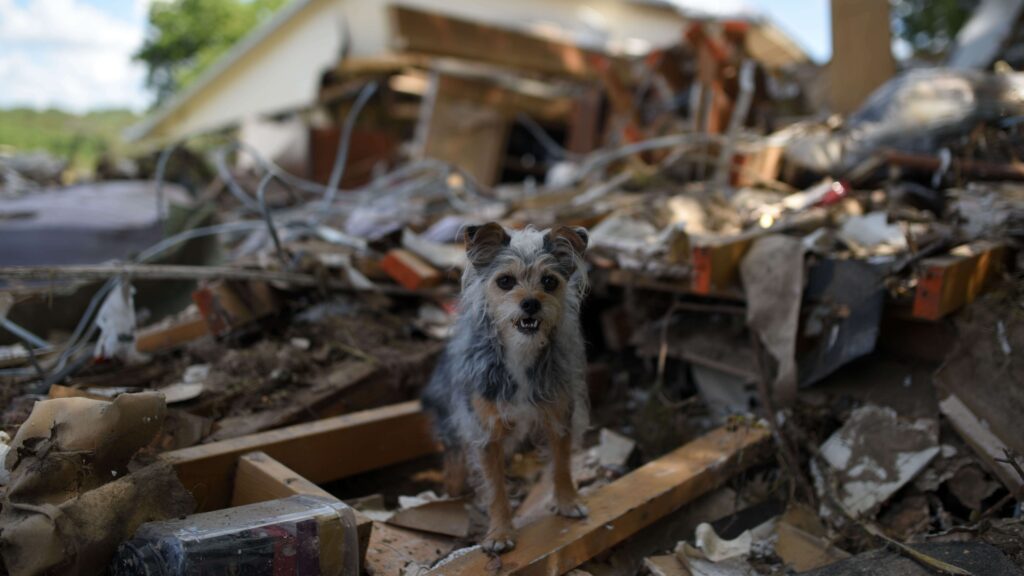
Every year, hundreds of thousands of pets are stranded, separated from their owners, or evacuated during disasters. In 2024, for example, the ASPCA reports that their Hurricane Helene relief efforts impacted more than 25,000 animals across the American southeast, including more than 5,400 that were assisted through search and rescue, emergency evacuations, temporary sheltering, and food distribution in North Carolina alone.
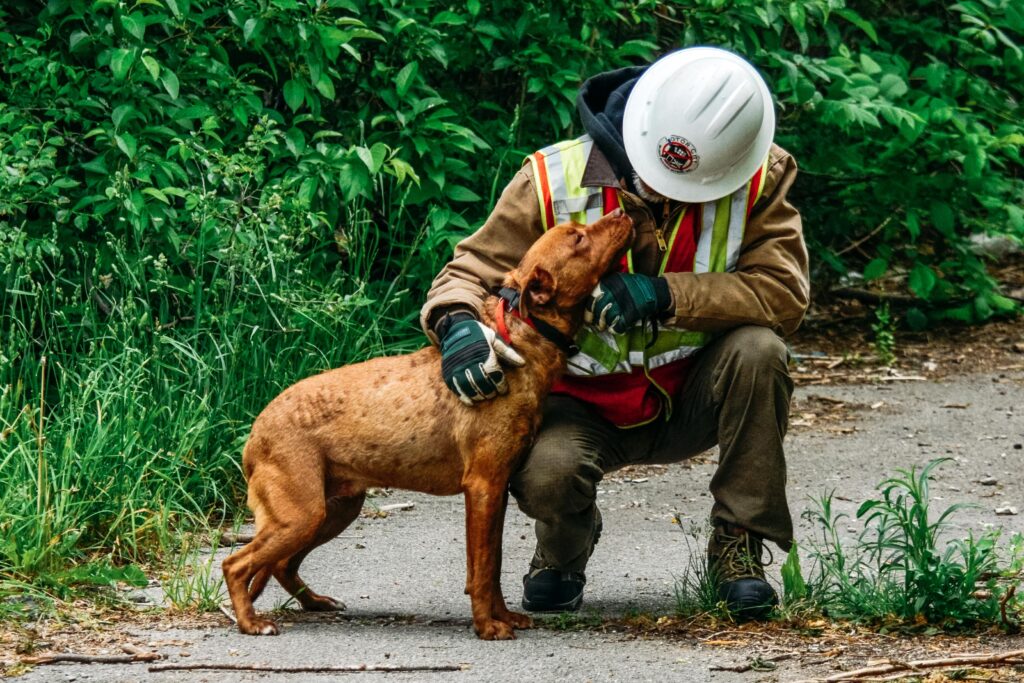
Given that an estimated 83% of pet owners live in disaster-prone areas—and that in all honesty, all pet owners live someplace where an emergency could happen—the disaster relief volunteers at Team Rubicon (known as Greyshirts) believe pets need an emergency plan just as much as humans do.
Step 1: Make a Pet Emergency Plan
Before any disaster strikes, everyone should know how to evacuate with pets.
Know Where You’ll Go

Knowing how to evacuate with pets starts with deciding where you’ll go and how you’ll get there. Identify and create a list of local pet-friendly emergency shelters, hotels, and friends or family who would allow you and your pet to stay together, as well as boarding facilities for your pet in a pinch. Don’t wait until an evacuation order is issued to find out whether a shelter accepts pets.
Plan How You’ll Get There
Identify pet-friendly transportation options—whether that’s the bus or pet-friendly ride-share companies—that can get you out of the disaster zone if you can’t drive yourself.
Know Who Can Evacuate Your Pet in an Emergency
In case you’re not home when disaster strikes, identify emergency contacts who could evacuate your pets. Then, make sure they know how to get into your home, how to secure your pet, and where to find your pet’s own disaster kit so they can grab it and go.
Pro Tip: Leashes should always be near the door in case you, or someone else, need to evacuate yourself and your pet in a hurry.
Step 2: Make Sure Your Pet Can Be Identified Before Disaster Strikes
Emergencies are stressful and unpredictable, and it doesn’t take much to spook an animal, which can bolt at the least provocation. For that reason, pets should be wearing ID tags at all times. If you get separated from your pet during a disaster, having their name and your contact info displayed clearly on them can be the deciding factor in how quickly you can be reunited.
If your pet doesn’t wear a collar or ID tag while roaming about your home, it’s important to have one you can put on your pet quickly in an emergency.
Check your pet’s microchip and ensure they are wearing a collar with ID tags that are up-to-date. Keep copies of their info in your pet’s emergency kit, too. Many animal shelters and veterinary facilities scan animals for microchips when they arrive, making an up-to-date microchip an important backup if a collar or ID tag is lost. Do an annual check, either with your vet or through the American Animal Hospital Association’s microchip search, of your pet’s microchip to ensure your contact info is up-to-date.
Step 3: Practice Your Plan
Once you’ve created your pet evacuation plan, practice it at least once before your area’s most likely disaster season. Practice getting pets into carriers, loading the car, and heading for an alternate, pre-identified evacuation route.
Then, buy your emergency contact dinner, make sure they know where your pet’s emergency kit is stored, and have them practice evacuating your pets on your behalf, too.
Step 4: Build a Pet Emergency Kit
Your pet emergency kit is one part of your larger pet emergency plan. Having one for your entire furry household makes evacuations quicker and easier. Plus, it lets an emergency contact grab everything and go if they need to evacuate your pets for you.
Leash, Collar, Harness
Since disasters typically strike with little to no warning, being able to grab a leash, go, and keep your pet at your side during a disaster is absolutely essential. Packing a spare harness and leash in your pet’s emergency kit will make things even easier.
Crate or Carrier for Each Pet
Even if you have a pet that travels well, if you end up at an emergency shelter, they’ll need a crate—whether to keep them out of stress or just to keep them contained.
Vaccination Records and Medical Information
Just like you should keep a copy of your own important contact info and medical records in your own disaster kit, your pet’s emergency kit should have a hard copy (laminated or sealed in a plastic bag) of essential vaccination and medical records.
Keep a recent photo of each pet with your emergency documents. If you become separated, a photo can help shelters, neighbors, and rescuers identify your pet.
3 Days Food and Medication
Your pet emergency kit should contain at least three days’ worth of food and medication for every pet in the household. Plus, your pet may be able to drink out of any old puddle, but having a bit of water set aside wouldn’t hurt.
Toys and Creature Comforts
Toys can take up valuable space, but including a favorite comfort item may help reduce your pet’s stress during frightening situations.
The Furry Bottom Line
With billion-dollar disasters on the rise, having a comprehensive emergency plan for every family member—including the four-legged ones—is essential. Taking time now to prepare proper identification, restraints, emergency kits, and transportation solutions can prevent heartbreak and help keep entire families together when disaster strikes.


