
When disaster strikes, staying in touch with loved ones can be one of the biggest challenges. Cell towers can go down, power can be interrupted, and internet access can become unreliable. Knowing how to stay connected during a disaster can help you receive emergency information, communicate with family and friends, and let others know you’re safe. Here are disaster relief volunteers’ emergency communication plans and their top tips for staying connected before, during, and after a disaster.
Combine High- and Low-Tech Tools to Communicate During a Disaster
Because disasters can take down cell towers and power, U.S. Air Force veteran and the Manager of Mission Support, Planning, for disaster relief nonprofit Team Rubicon Adam Martin relies on very low-tech tools during emergencies.
“Some of the very best methods of staying connected during a disaster are really analog things that, sadly, mostly don’t exist anymore,” says Martin. “A good old-fashioned landline can work wonders. But how many of those do you see around anymore?”
But many analog systems do still work, he argues, whether that’s a set of walkie talkies or a hand crank radio, and Martin uses them with his own friends and family.
His advice is to combine high- and low-tech solutions to stay informed and communicate during a disaster.
Use an Emergency Radio to Stay Informed
When a disaster approaches or strikes, NOAA weather radios broadcast emergency alerts and weather updates over the airwaves. That’s why having an old-school, battery operated radio—think those clock radios of yore—or a hand-crank radio will allow anyone to hear official emergency updates.
Emergency alerts can provide critical information when cellular service is available, so make sure wireless emergency alerts are enabled on every phone.
• Do Before a Disaster: Buy an inexpensive battery-powered or hand-crank emergency radio. Ensure emergency alerts are turned on on all phones.
Use Walkie-Talkies to Communicate During a Disaster
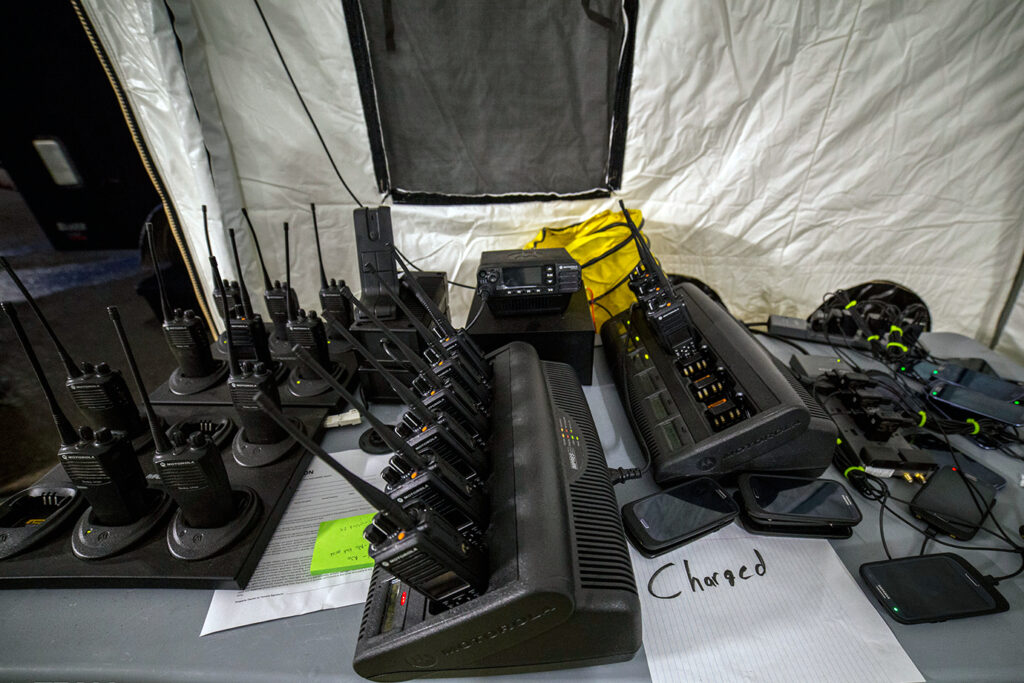
It may sound novel, but having a couple of walkie-talkies charged and ready at all times allows you to stay in touch with family members within range of each other as you navigate a disaster zone together or separately.
“If everyone has their own radios charged and set to the same channel, you can check in on one another while you’re riding out or evacuating a storm,” says Martin.
• Do Before a Disaster: Set a channel plan with friends and family and charge two-way radios (now) so they are ready when a disaster strikes.
Use Text Messages for Emergency Communication
During a disaster, text messages often work when voice calls don’t, as they require less bandwidth and can queue up until networks clear. If you’re trying to get emergency info out to friends and family, text before calling.
Use Satellite Communication When Cell Service Is Down
Go for satellite-enabled comms if you can in an emergency, whether that’s by using an actual satellite phone or services from your cell provider.
Satellite phones, or SAT phones, are great—Team Rubicon sends one along on every single international humanitarian aid deployment—but between the cost of the phone and a subscription for services, the price can put them out of reach for many. If you do want to invest in one, prices for satellite communicators range anywhere from $300 to $2,000.
These days, you often don’t even need a special device to use satellite technology: it may already be in the palm of your hand. Apple users with an iPhone 14 or later can now send iMessages to their contacts or SMS messages via satellite when they’re off the grid—or the grid is offline.
Android users with a Google Pixel 9 series or later or the Samsung Galaxy S25 series can also send free SOS messages to emergency services.
Cell service providers have also gotten in on the satellite game. Verizon offers a satellite messaging service that allows anyone with an enabled phone to text (SMS of fewer than 140 characters; iMessages of 500 characters max) with friends, family, and others via satellite.
T-Mobile’s T-Satellite service activates automatically when you’re out of range or when cell towers are down and allows the use of certain apps and lets people text, voice chat, share locations, and more. T-Satellite is included with some plans and available to other subscribers as an opt-in for $10 a month. Even non-T-Mobile customers with an unlocked, satellite-optimized phone can add T-Satellite to their current carrier’s plan.
• Do Before a Disaster: Sign up for satellite service through your provider or T-Mobile.
Use Social Media for Disaster Updates and Check-Ins
One of the best ways to stay apprised of disasters in your area is via social media. Many government agencies, such as the National Weather Service (@NWS), post updates on their social media accounts during severe weather events, but even networks like Facebook and NextDoor can provide hyper-local updates about disasters in real-time.
You can also use social media platforms, like Facebook Safety Check, X, BlueSky, or Instagram, to update your status for family and friends. Most offer an option to mark yourself safe when a crisis hits the area you’re in.
• Do Before a Disaster: Follow your local accounts in advance of disasters so that you know who to trust in an emergency.
Keep an Offline List of Emergency Contacts
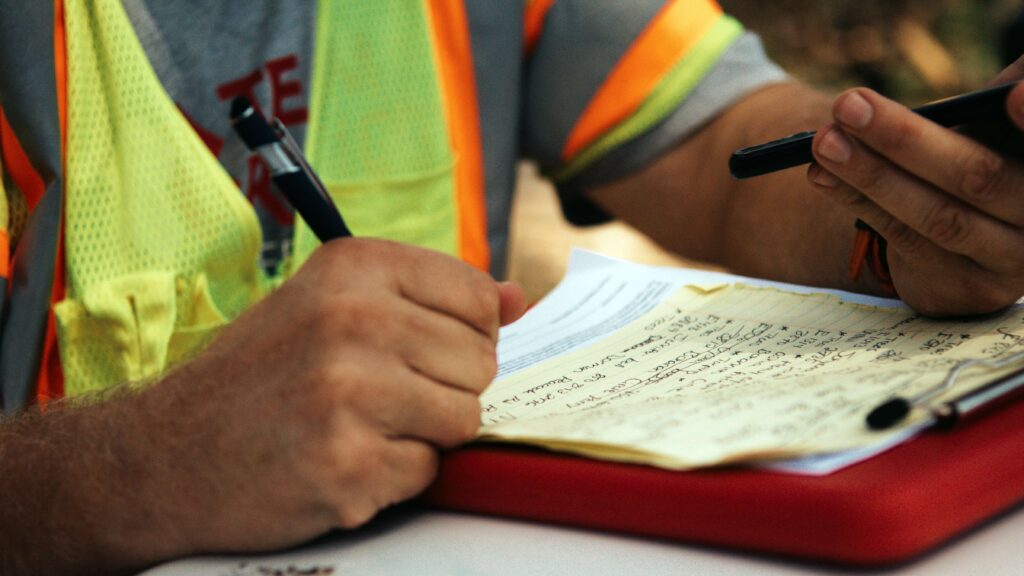
Martin urges everyone to jot down and keep a list of essential numbers. Whether it’s your kids’ nanny’s cell number, your own emergency contacts, or your vet’s office number for an emergency pet script, having a hardcopy of your contacts can be a lifesaver should your device get destroyed in a disaster.
• Do Before a Disaster: Print out a list of emergency contacts and keep a copy in wallets, purses, and your disaster kit. Include your walkie-talkie channel plan on the list. Also, program emergency contacts into every phone.
Create a Backup Communication Plan
“The main thing is just building in as many redundancies as you possibly can,” says Martin. That means that not only does he have a hand-crank emergency radio in his own personal disaster kit, but he also has a phone that can send text via SAT, and a hard copy of all of his most important contacts in a plastic baggie in his disaster kit.
Lastly, Martin reminds everyone to have backup power of some sort to keep the lines of communication open during a disaster, whether that’s in the form of extra batteries, fully-charged power banks, or even some sort of solar charger.
The Bottom Line on How to Stay Connected During a Disaster
Build redundancy into your emergency communication plan:
- Keep a battery-powered or hand-crank emergency radio available.
- Send text messages instead of making phone calls when networks are congested.
- Keep charged walkie-talkies available for local communication.
- Know how to use satellite messaging if your phone supports it.
- Follow trusted government and emergency-management accounts on social media.
- Keep a printed list of emergency contacts.
- Have backup power, including batteries and power banks.