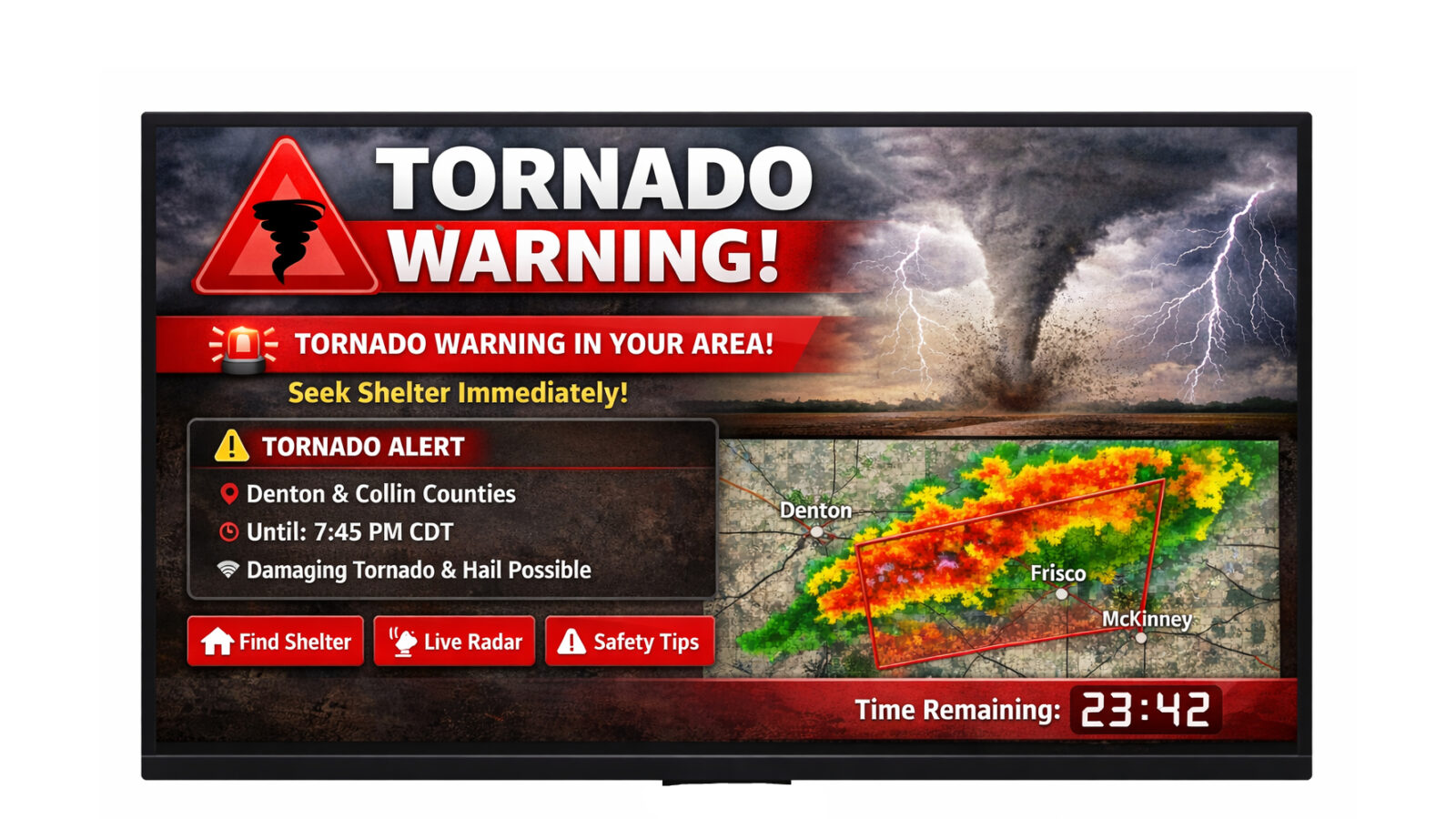
Tornadoes can form quickly, sometimes leaving communities with only minutes to take shelter. In the United States, tornado warning apps, emergency alert systems, and connected technologies help ensure people receive life-saving warnings wherever they are. From built-in smartphone alerts to specialized weather apps and government emergency notifications, the best tornado warning apps can deliver tornado alerts instantly—often before sirens sound or television broadcasts update.
For individuals and families, understanding what tornado apps to use, how the technologies work, and how to enable them can make a critical difference when severe weather threatens.
Best Tornado Warning Apps at a Glance
- Wireless Emergency Alerts (built into your phone): Automatic government-issued tornado warnings
- Government apps, like the FEMA app: National Weather Service alerts plus preparedness tools
- Independant apps like:
– CodeRED Mobile Alert: Local emergency alerts and phone call notifications
– Clime: NOAA Weather Radar Live: Radar maps and severe weather tracking
– MyRadar Weather Radar: Real-time radar imagery and customizable weather alerts
– American Red Cross Emergency app: Tornado alerts and preparedness resources
– The Weather Channel app: Watches, warnings, and broader weather tracking
How Tornado Warning Apps Help You Get Alerts Faster, Anywhere
Behind every alert notification is a nationwide emergency communication system designed to reach the public quickly. At the center of this network is the Integrated Public Alert and Warning System (IPAWS), operated by the Federal Emergency Management Agency. IPAWS allows federal, state, and local agencies to send alerts simultaneously through multiple channels—including television, radio, weather radios, and smartphones.
When the National Weather Service issues a tornado warning, the alert is transmitted across this system within seconds, triggering notifications on mobile phones across the affected region.
Built-In Smartphone Alerts: The First Line of Warning
One of the most effective tornado alert systems is already built into most smartphones: Wireless Emergency Alerts, or WEA.
WEA are short, text-like messages sent by authorized government agencies—including the National Weather Service and local emergency management offices—through the nation’s emergency alert network. These alerts notify people when they are in the path of serious threats such as tornado warnings, flash floods, or hurricanes.
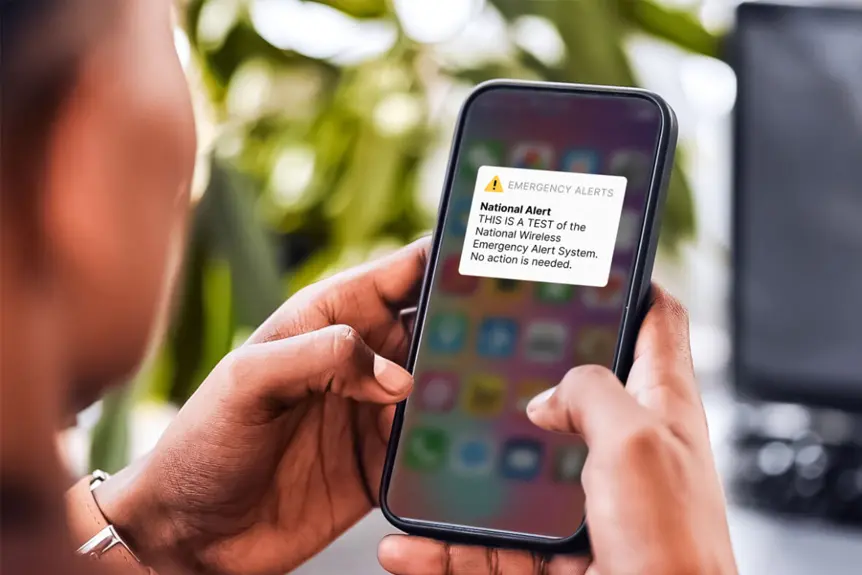
Unlike traditional text messages, which travel across a cell network, Wireless Emergency Alerts are broadcast through nearby cell towers to every compatible phone in the affected area. This method allows the alerts to reach both local residents and those traveling in the area without requiring a phone number or subscription, and means the alerts aren’t hampered by network congestion during an emergency.
While most smartphones have these alerts enabled automatically, some users may have turned them off.
How to Enable Tornado Alerts on Your Phone
On iPhone:
1. Open Settings
2. Tap Notifications
3. Scroll to the bottom
4. Turn on Emergency Alerts or Government Alerts
On Android:
1. Open Settings
2. Tap Safety & Emergency or Wireless & Networks
3. Select Emergency Alerts
4. Toggle on alerts for extreme threats and severe threats
Once enabled, these alerts will appear as loud notifications designed to cut through other phone activity—even when you are traveling through an unfamiliar area.
The Best Tornado Warning Apps for Tracking Storms
While Wireless Emergency Alerts provide essential warnings, many emergency managers recommend pairing them with official preparedness apps. In addition to official alert systems, weather apps provide valuable real-time storm tracking that can help people monitor developing threats.
A host of apps often combine National Weather Service data with radar visualization, allowing users to watch storms develop and move in real time. That’s why many meteorologists and disaster relief volunteers recommend using both a government alert system and a radar app, creating multiple layers of warning. When comparing tornado warning apps, experts recommend using more than one source of alerts, combining official government notifications with radar-based weather tools.
CodeRED Mobile Alert
CodeRED works across multiple technologies, so not only does it allow users to receive push alerts from local emergency management agencies wherever you are—at home or while traveling—anyone who enters their phone number will also receive a call from CodeRED when danger presents. Available on both iOS and Android.
Clime: NOAA Weather Radar Live
Providing live radar maps and severe weather notifications, Clime is, fundamentally, NOAA’s tornado tracker. It’s available for both iOS and Android devices, as well as via a QR code.
MyRadar Weather Radar
Offering real-time radar imagery and customizable weather alerts, including alerts for tornadoes, MyRadar is available in the Apple App and Google Play stores, as well as from Microsoft.
The American Red Cross Tornado and Emergency Alert App
The American Red Cross tornado app is now embedded within its overall emergency app, which provides alerts for severe weather, including tornadoes, and features short guides to help you prepare before disasters and find nearby open Red Cross shelters and services after a storm. Available for iOS and Android, or by texting “GETEMERGENCY” to 90999.
The Weather Channel App
The Weather Channel’s app sends alerts for tornado watches and warnings, as well as for lightning and other severe weather. Free and available for both iOS and Android devices
Government Tornado Warning Apps Provide Additional Alerts
Among government-backed tornado warning apps, the FEMA app stands out because it lets users monitor multiple locations—making it useful for families who want alerts for relatives in different cities—and receive National Weather Service alerts. The app also includes disaster preparedness guidance, safety tips, and information about shelters and disaster recovery resources.
To download the FEMA app, visit the FEMA mobile store, or visit the Apple App Store or Google Play Store. Users can also download the app by sending a text request: On an Android device, text ANDROID to 43362 (4FEMA); on an Apple Device, text APPLE to 43362 (4FEMA).
Once installed, users can add their ZIP code and additional locations to receive alerts for areas that matter most to them.
Staying Ahead of Tornadoes
For those who don’t want to wait for a tornado alert or notification, or who want to track storms before they happen, there’s NOAA and the National Weather Service’s Storm Prediction Center. The web page features a live map that outlines the potential for tornadoes, color-coded for severity, as well as thunderstorm threats, wildfire danger, and more.
Building a Layered Warning System
Emergency preparedness experts recommend using multiple sources of alerts to ensure warnings are received quickly.
A strong personal alert system may include:
- Wireless Emergency Alerts enabled on your smartphone
- A government preparedness app, such as the FEMA app
- A weather radar app with customizable notifications
- Local emergency notification systems run by cities or counties
- NOAA Weather Radio for backup alerts during power outages
Using several tools together, including using social media, increases the chance that you will receive warnings—even if one system fails.
Preparedness Starts Before the Storm
Disaster relief organizations regularly see firsthand how devastating tornadoes and other disasters can be for communities across the country. In the aftermath of severe weather, volunteers often deploy to help families clear debris, repair homes, and begin the long process of recovery. That’s why preparedness should begin long before a tornado strikes. The more prepared an individual or community is, the faster they recover after a disaster.
The best tornado warning apps are the ones you enable before severe weather strikes and use as part of a layered alert system. Downloading them before a storm threatens and, enabling emergency alerts, and understanding how warnings are delivered can give people valuable minutes to seek shelter when a tornado approaches. When it comes to severe weather, those minutes can save lives.