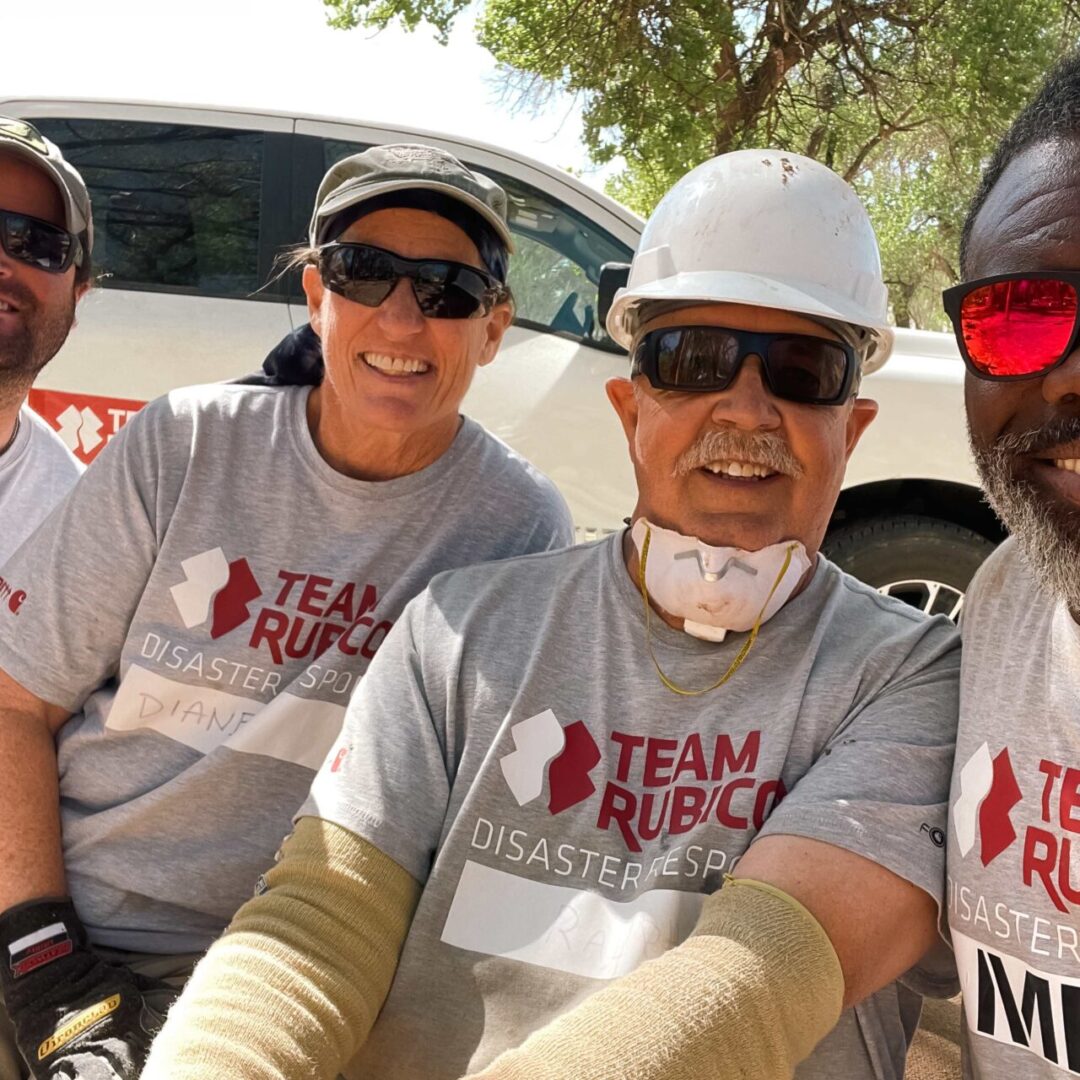
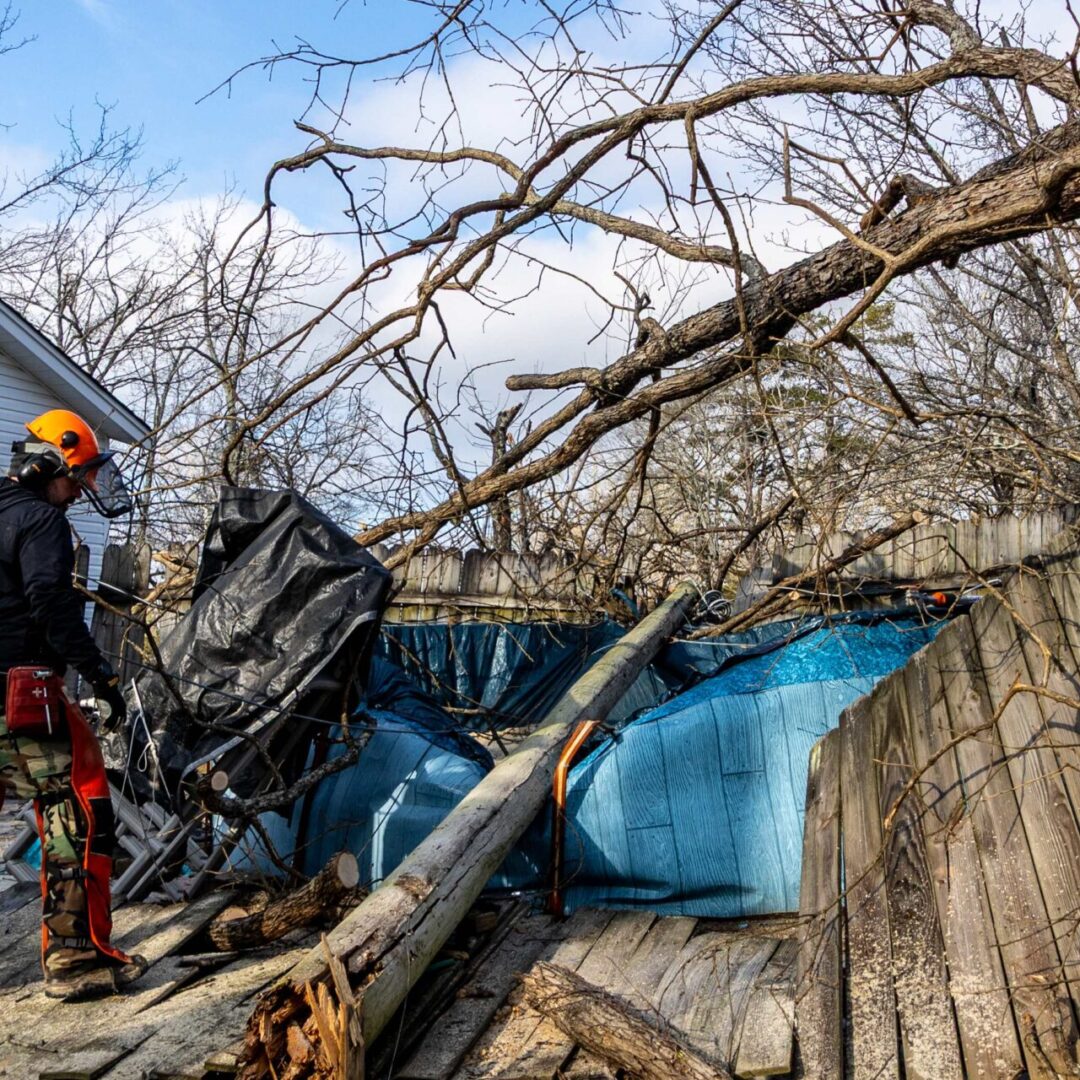
Three weeks after Hurricane Melissa devastated Jamaica, Team Rubicon has expanded its Hurricane Melissa relief operations on the island. More than 40 Team Rubicon volunteers—known as Greyshirts—are currently deployed in Jamaica supporting Hurricane Melissa relief efforts. Operations are expected to run through late December to support communities across the island.
“What I saw was devastation comparable to what I saw with the Haitian earthquake of 2010. Fortunately, the death toll in Jamaica was much lower. But in terms of physical damage, it was comparable. Entire sections of towns were reduced to rubble. All public services were gone with little hope of a quick restoration,” said David Larivee, a Greyshirt who deployed with Team Rubicon in Jamaica.
The operation consists of two parts: A medical humanitarian aid operation, and nonmedical disaster recovery services.
Team Rubicon’s Hurricane Melissa relief operation exemplifies the way the organization conducts disaster response through multi-sector coordination. By partnering with local government agencies, international health organizations, and deploying specialized teams across medical and infrastructure domains, the organization is addressing both immediate health crises and the foundational work needed for community recovery.
Medical Operations Focus on Critical Wound Care
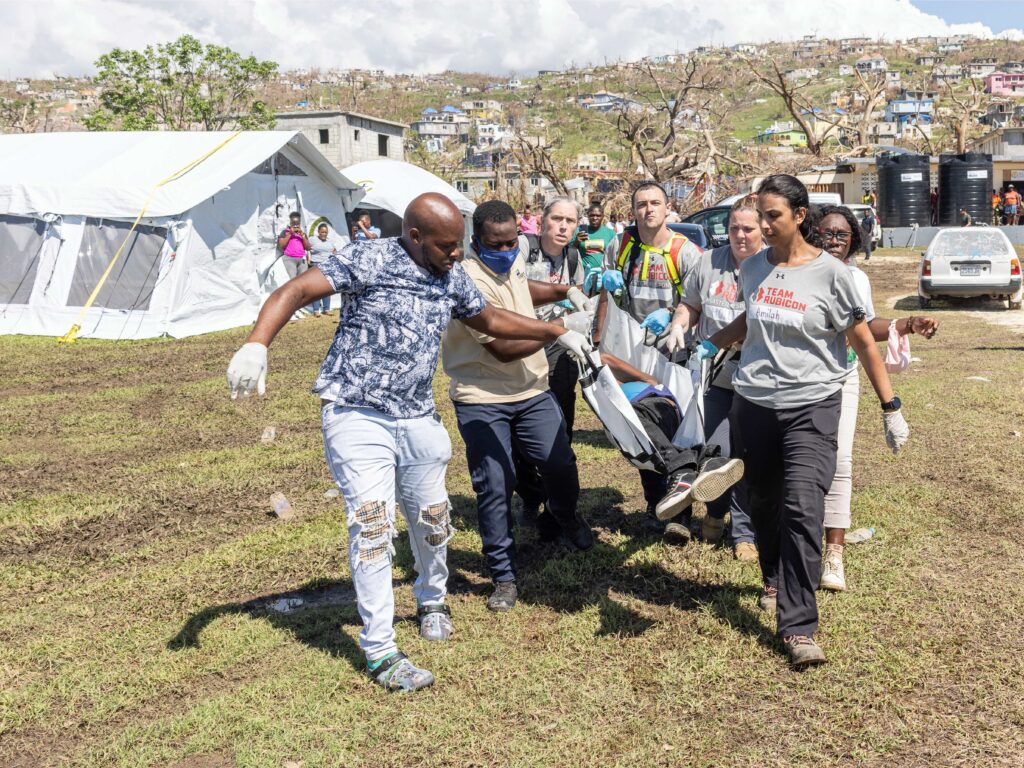
The Emergency Medical Team Type-1 Mobile Team has been operating in Jamaica’s westernmost parish, Westmoreland, as part of Team Rubicon’s broader Hurricane Melissa relief mission in coordination with the Jamaican Ministry of Health and PAHO, the Pan American Health Organization. Presently, the team has established two critical care sites: A clinic at Savanna-La-Mar Hospital, which is providing acute care services tailored to local needs, and a temporary clinic in Whitehouse to extend medical reach.
To date, the medical team, which is composed of physicians, registered nurses, paramedics, and logistics members, has treated more than 600 patients, with a focus on critical wound care—a vital service in disaster zones where injuries from debris and compromised infrastructure are common.
Hurricane Melissa Relief Efforts Seek to Help Communities Across Jamaica
Working alongside the National Works Agency, Team Rubicon’s nonmedical advance team initially assessed needs in Westmoreland Parish, focusing on route clearance and access restoration. They have since been reinforced by additional Greyshirt responders.
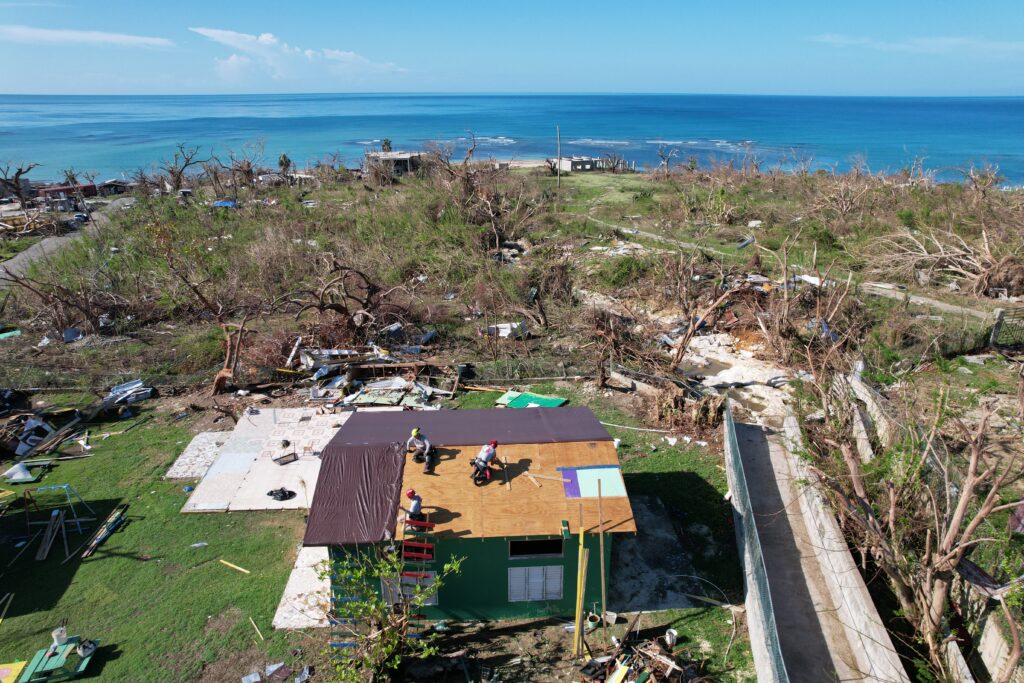
Currently, the 25 Greyshirts are conducting chainsaw operations to remove fallen trees and vegetation, tarping roofs to protect damaged structures, conducting muckouts and general debris removal to help return local residents to their homes—critical components of Hurricane Melissa relief in the hardest-hit areas.
Greyshirts also continue to provide road clearance services in order to restore ingress and egress routes. And, they are providing expedient repairs at schools, daycares, and police stations. Such community buildings serve dual purposes as both essential public facilities and emergency shelters, making their restoration a priority. For example, the Greyshirts recently finished repairs on a school in the 4,000-person fishing town of Whitehouse, which serves as a school for 250 children. In nearby Beeston Spring, Greyshirts tarped and repaired the roof of a church and helped restore a greenhouse that provides food for the community.
Expanding Access to Isolated Areas
Core capability teams are not only repairing schools and clearing debris but also establishing landing zones for airlifts. This critical work provides critical ingress and egress to damaged areas and enables other NGOs to expand Hurricane Melissa relief by facilitating the delivery of essential supplies to areas still cut off by blocked land routes, ensuring that even the most isolated communities receive needed support.
“We’re seeing things slowly opening up. Roads are improving. Access to rural areas is improving largely due to our route clearance efforts,” says Jamie Brown, a Greyshirt deployed on Team Rubicon’s Hurricane Melissa relief operations in Jamaica. “As the local communities see the work we are doing, they are coming out more and asking for help. That’s true with the medical team, chainsaws, and roof tarping. Since we are focusing much of the tarping and saw work on community properties like police stations, churches, schools, and community centers, local leaders are extending cooperation, collaboration, and appreciation for everything. Our folks are building genuine relationships with them.”
Coordinated Humanitarian Aid Sustains Hurricane Melissa Relief Through the Holidays
As operations continue through late December, Team Rubicon’s integrated approach is helping restore safe spaces for children and families while providing essential medical care to those affected by Hurricane Melissa.
According to several Greyshirts, inter-NGO cooperation on the ground in Jamaica has been really inspiring.
“Partners like World Central Kitchen, Food for the Poor, and Samaritan’s Purse were in action beside us and eager to share resources and information. Parish government workers were clearing roads. The Los Angeles Search and Rescue team shared critical information from their assessments. Sandals Foundation is supporting us with food and billets while they checked in on their community leaders and sponsored schools. IsraAID was in the field working to shelter children,” says Larivee.
Cooperation has been so extensive that when one of Team Rubicon’s medical teams called for a medevac from its clinic in Whitehouse, a World Central Kitchen helicopter showed up—in 15 minutes—to do the transport.
But, most inspiring—and critical—has been the way Jamaicans have stood up for their own.
“Local Jamaicans have worked beside us to deliver aid and to help build and sustain our network of partners,” says Larivee. Some of the most dedicated humanitarians were shoulder-to-shoulder with us, helping Jamaica get back on its feet.”
For that reason, food and water supplies are now stable. But work remains.
“We need to help Jamaica get shelter for its people,” urged Greyshirt Larivee.