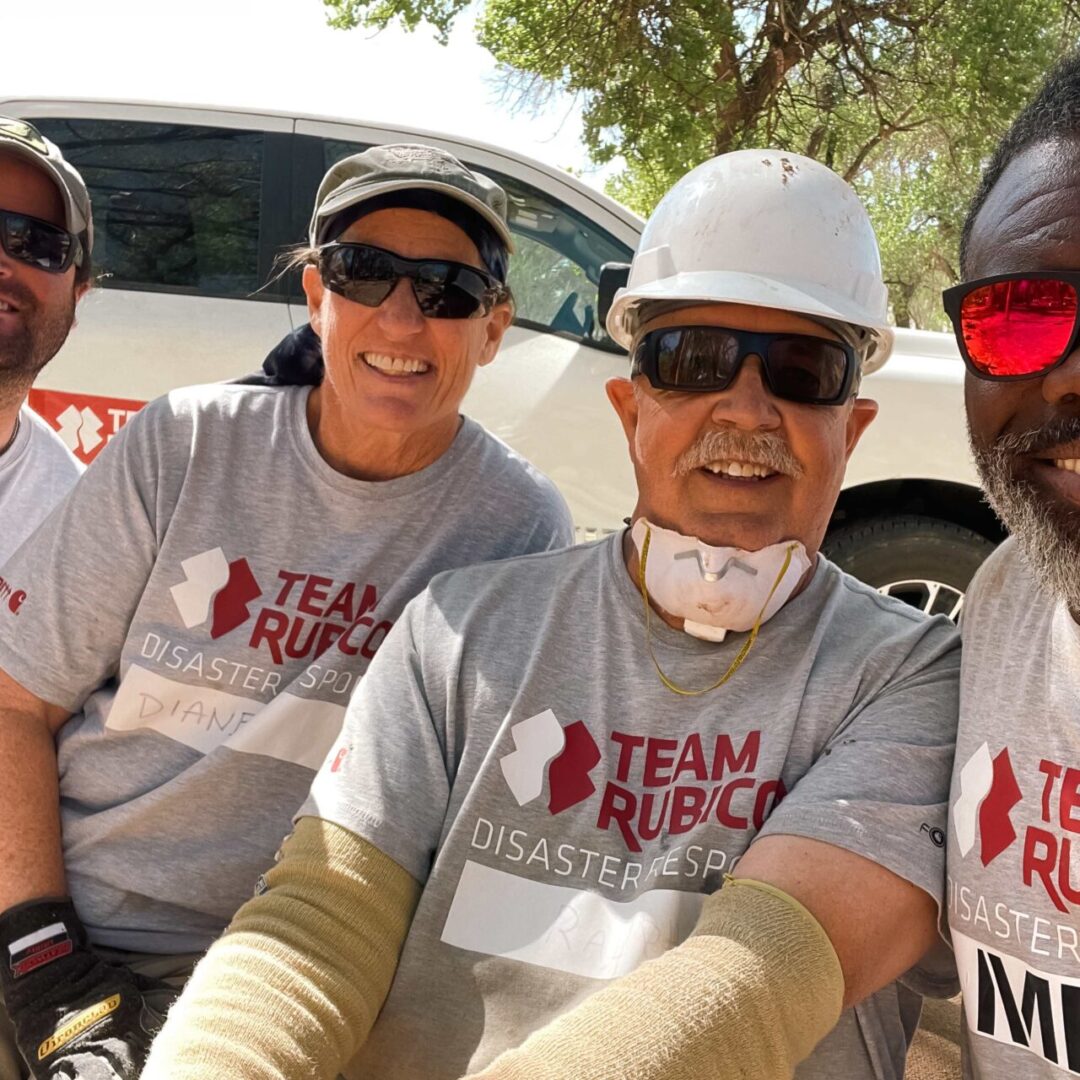
It’s 8 a.m. on a Monday, and the room is already a flurry of activity. A cluster of people surrounds a map laden with hurricane tracks, talking hurriedly. Across the room, another is gathered around a computer screen, brows knit in fierce concentration. Everywhere I turn, there’s movement—papers shuffling, fingers flying over keyboards, quick footsteps crossing the floor. The air is taut with purpose as every person races against a storm soon to arrive.
This is Team Rubicon’s National Operations Center, or NOC, and right now it’s filled with more than 60 staff and volunteers from all functions—planning, logistics, advancement, tech, and more. They’ve traveled from all over the country to take part in the year’s massive hurricane preparedness training exercise: HURREX.
Held annually the first month of hurricane season, HURREX—shorthand for hurricane exercise—is Team Rubicon’s all-out staff and volunteer training for how the organization will respond before, during, and after a major hurricane makes landfall in the U.S.
The five-day-long training simulates all aspects of planning for response to a large-scale hurricane—from tracking potential landfall to standing up an Emergency Operations Center, or EOC, to deploying route clearance teams and more. HURREX also allows Team Rubicon to assess its procedures, coordination, and communication protocols; identify strengths, address any areas for improvement, and ultimately fortify our collective ability to respond effectively to emergencies.
This year, 2025, would be only my second hurricane season as a Greyshirt and BrandComms staff member, and this would be my first time ever attending a hurricane preparedness training. I didn’t know what to expect. Many of my fellow colleagues and Greyshirts are seasoned veterans—or at least that’s how it felt to me.
Even before I arrived at the NOC for HURREX, I’d felt anticipation, nerves, and of course, excitement. For me, this hurricane preparedness training wasn’t just about learning what happens during a hurricane response operation at the top level of Team Rubicon, but also an opportunity to hone my communication skills and refine our BrandComms’ processes for hurricane season.
Going into HURREX, we knew a bit about the incoming hurricane, which Team Rubicon had named Hurricane Dexter. About two weeks before HURREX kicks off, everyone attending gets an email notifying us that the storm is brewing. Then, we get a notification that Team Rubicon is activating an EOC, information about the disaster scenario, logistics of the disaster and response, and more.
Using Real World Models for an Imaginary Hurricane
Day one kicks off just like day one of a true EOC activation. It’s a hot start. Dexter might have been imaginary, but the impacts we’d be addressing were built on real-world experiences. That’s because Team Rubicon bases HURREX—and the imaginary hurricane—just like it’s a real operation, and a real disaster. At HURREX, the imaginary hurricane is modeled on real, historical storms: In the case of Dexter, that was the 1900 Galveston hurricane and Hurricane Ike.
“It [Dexter] moved in with the speed of the Great Storm of 1900 that hit Galveston, and once it made landfall, we transformed the storyline into Hurricane Ike,” explains Team Rubicon Operations Manager Greg Ramoni, of this year’s hurricane preparedness training. “Hurricane Ike in 2008 made landfall in Galveston and stayed a Category 1 storm to mid-Indiana and Illinois.”
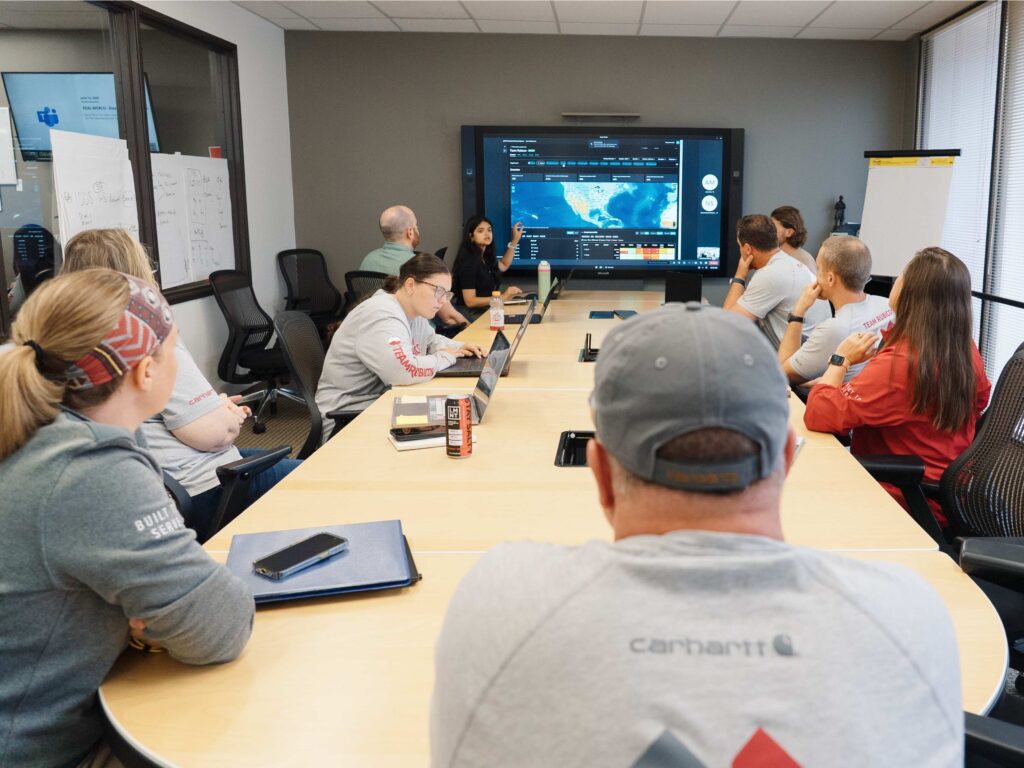
Modeling on real, historical storms would give HURREX participants the ability to look at all geographical and GIS information from Galveston—where Dexter would make landfall—all the way to Chicago and Louisville. It also forced the teams participating in HURREX to look at requests for assistance and real situations of Hurricane Ike, and make those decisions on where Team Rubicon best fit and how we could change the disaster cycle.
I arrived ready to hit the ground running.
Day Two: 24 Hours to Landfall
Every hurricane and hurricane season is different and comes with its own unique set of challenges. HURREX prepares staff and volunteers from all functions by testing our standard operating procedures and the playbooks we’ve developed in advance of hurricane season against the unexpected and the challenging.
For example, during an actual disaster, it’s BrandComms’ responsibility to handle all media inquiries and coordinate interviews. What do you do when you get 15, 20, or 25 inquiries all at once? I needed to ensure we didn’t miss out on any of those opportunities, but I also had to prioritize which stations we gave interviews to.
Hurricane Dexter was incoming and everyone involved in HURREX was staging and preparing for landfall—and working under a condensed hurricane timeline.
Across the room, the mission planning teams were being built. Recon teams had been identified and began mock staging, while route clearance teams were virtually moving—as if they were doing so in the real world.
For me, day two of this hurricane preparedness training would be dedicated to preparing social media posts, writing talking points, creating media advisories, and sourcing content producers in preparation for the incoming hurricane. Just like in a real storm, we prepare as much as possible before the hurricane makes landfall so that when $#+ hits the fan, we’re in the best position to respond.
Meanwhile, the logistics team was having to secure vehicles for an operation—cars and trucks to get Greyshirts to work sites where they could serve disaster survivors, for example—and answering the question of how to do that in a disaster zone, when local rentals are often not available. It’s just an example of the million challenges hurricane response teams can face during hurricane season. Here at the training and also in the real world, it’s our job to find solutions to every hurdle a disaster throws at us.
Ramoni, who led this hurricane preparedness training and is himself a seasoned hurricane volunteer, said “HURREX25 was a resounding success. The Emergency Operation Center (EOC) embodied Team Rubicon’s ‘One Team, One Fight’ ethos, collaborating with urgency, precision, and purpose to tackle each scenario presented.”
The Landfall May Be Fictional, But the Hurricane Preparedness Training is for Real
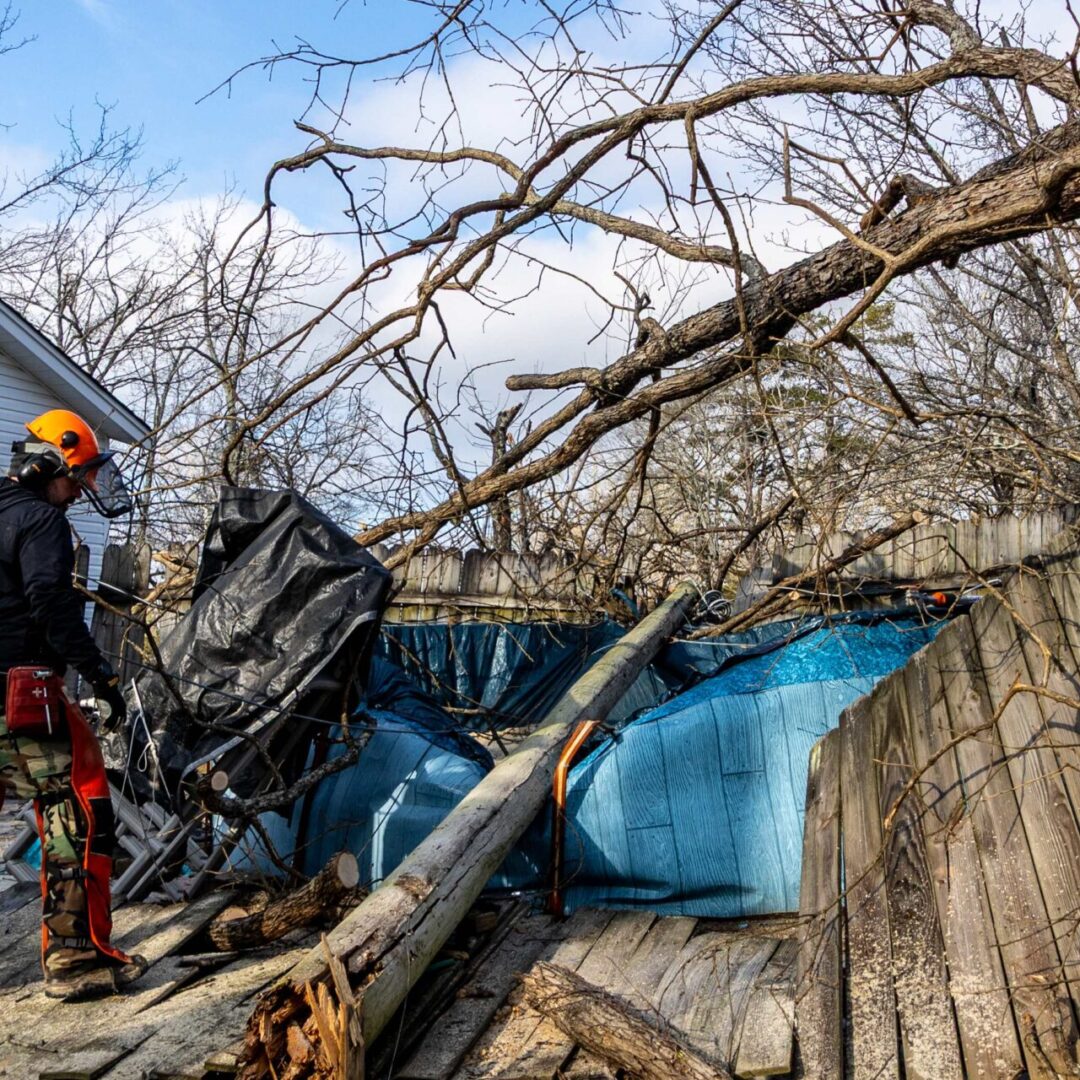
On day three of the exercise, the hurricane made landfall. While I was busy fielding calls from reporters asking what Team Rubicon was doing in response to Hurricane Dexter, several route clearance teams were stood up and (the simulated teams) began pushing from the NOC toward Galveston, where our (imaginary) Hurricane Dexter had made (imaginary) landfall. Logistics was busy moving resources to the affected area by sending the mobile FOB, vehicles, and trailers to the staging area. Planning was doing disaster impact and resource mapping, identifying the damaged communities that are high on the social vulnerability index that we may respond to. Mob was, unsurprisingly, mobilizing volunteers for the operation. Field leadership was identifying qualified volunteers to serve on the operation’s Command and General Staff.
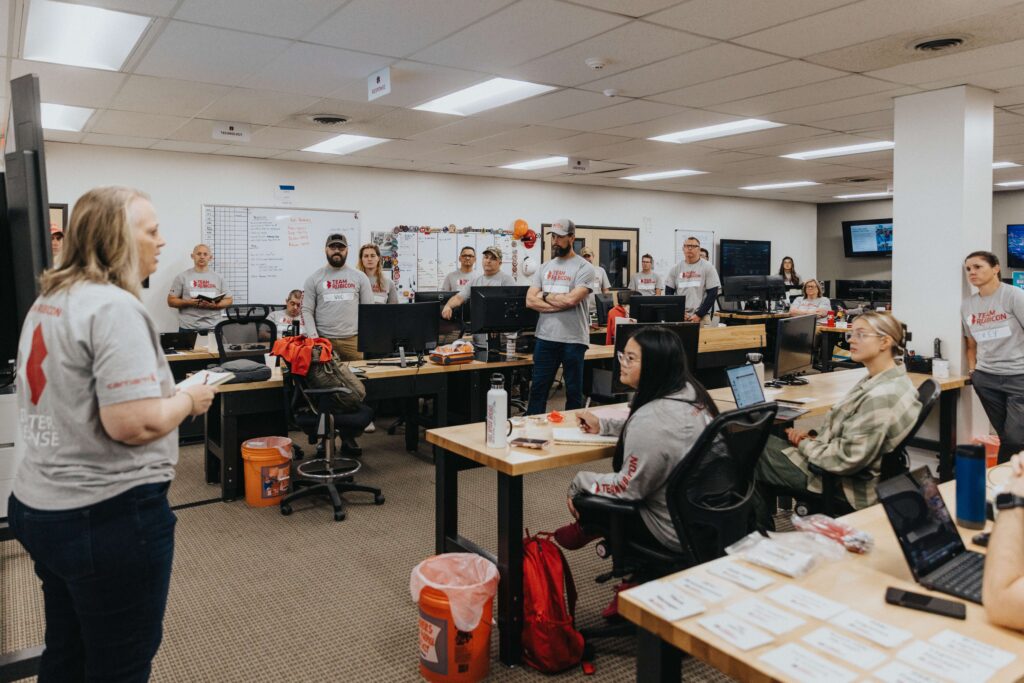
As the exercise progressed, the sections identified and implemented key process improvements that will enable us to respond faster and more effectively this hurricane season. There will always be improvements to be made, but each time we activate the EOC, we uncover pressure points to make the overall response better as to provide the survivors of disaster that much-needed help quicker than ever before.
HURREX presents an invaluable opportunity for Team Rubicon to bolster its preparedness and response capabilities in anticipation of potential hurricane scenarios. The participation of Greyshirts during this exercise significantly contributes to the success of future EOC activations.
Noise in the Chaos
The simulation of preparing for a hurricane was so realistic that on day three—landfall day—we even lost power (or, the higher ups pulled the plug on us) during one day of HURREX and had to set up generators and continue working by using Starlink and camping lanterns.
The truth is, that’s exactly what would happen during a disaster. In many cases, local communities are often without power for days, or even weeks, in the wake of a hurricane. The volunteers who are serving these local disaster survivors are no exception. If the survivors of a disaster are without power, so would we be, and yet that work must continue. A hurricane knocking out our lights and Wi-Fi isn’t enough to stop us.
Day four was the zero-to-24-hours-after-landfall window. While I was responding to dozens of inquiries from reporters, handling unexpected hurdles—such as a potential copyright issue with the imaginary operation’s name, Operation Buccee’s Run—managing countless injects, and most importantly, ensuring that Team Rubicon told the story of what our Greyshirts were accomplishing in the face of disaster, our Greyshirt teams were out in the field. They were conducting recons and route clearance, and they were getting the operation to OPORD—getting it launched so that we could send hundreds of Greyshirts into the disaster zone. Meanwhile, the powers that be were creating even more noise—like that copyright issue and million-dollar subdivisions demanding our assistance—for us to filter through.
Lessons Learned from Team Rubicon’s Hurricane Preparedness Training
As HURREX came to an end, I was spent. But I wasn’t the only one who was tired. By the end of the week, everyone was exhausted. Mob had booked more than 100 volunteers to deploy on the operation; logistics had stood up multiple FOBS and equipped them with everything needed, from cots to printers to showers; and the route clearance teams had successfully cleared miles of debris to open access to hospitals. Every function completed a mountain of tasks and, as a team, we were able to respond to the hurricane with speed and expertise.
I learned a lot during HURREX 2025, like that Team Rubicon is truly the leading disaster response organization. By dedicating resources to training exercises like HURREX, it prepares for hurricane season far better than most other response organizations. For this Greyshirt and communications pro, it was amazing to see the immense time and effort staff and volunteers expended just to ensure we’ll be able to best serve those who will need us the most this hurricane season.