My name is K Umesh—I go by Max—and my world is typically one of machine learning and AI. Typically, I spend my days building and optimizing complex systems, working with algorithms and data to solve intricate problems, peacefully from the East Coast and sometimes in the hustle and bustle of the Bay Area. But when I saw Team Rubicon’s mission in action, something shifted. I felt a pull toward a different kind of challenge, one where the variables were human need and a community’s resilience. I decided to become a disaster response volunteer and join Team Rubicon.
Why I Became a Disaster Response Volunteer
I first discovered Team Rubicon during this summer’s Texas floods. I was looking for an opportunity to serve the community, and Team Rubicon was the only nonprofit organization that I saw really responding to the Texas floods. So, I registered to become a Team Rubicon volunteer—or Greyshirt—and awaited my orders.
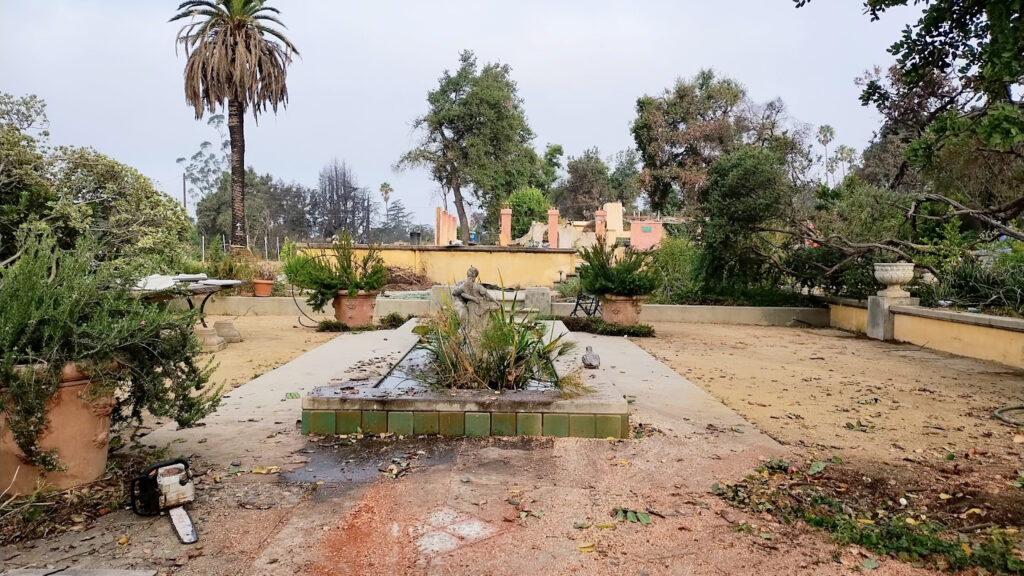
While I wasn’t called up to serve on the flood response, I soon found myself deploying to California for a wildfire recovery operation in response to January’s Eaton fires. In Altadena, the fire had burned more than 14,000 acres, destroying or damaging 7,000 structures and disproportionately affecting Black residents. It left behind hazardous vegetative debris that, less than a year later, poses increased risk for erosion, flooding, and additional hazards if not properly mitigated.
My deployment as a disaster response volunteer was to the Eaton wildfire in Altadena. It wasn’t just a volunteer vacation; it was a pilgrimage that took me from Knoxville to the command center to the front lines, and it forever changed my perspective on what truly matters.
Greyshirt Journey, Part One: Arriving at the Forward Operating Base
Day one was all about the journey. After a long travel day, I arrived at the Forward Operating Base, or FOB, a bustling hub of organized chaos. This was where the operation truly began, meticulously overseen by individuals like Steve, our logistics chief, who ensured everything from transportation to supplies ran smoothly. This was a place of introductions and first impressions, where I met the other Greyshirts who would become my family. We settled into a new reality defined by disciplined routine briefings, lights-out, and a schedule that felt both military-precise and deeply human.
In the Field Training for My First Disaster Response Operation
My first morning at the FOB began with the welcome shock of strong coffee and a team of equally strong volunteers, all ready for a long day. The morning briefing, often led with a calm authority by the planning section chief, safety chief, operations, training, and by Augie, our incident commander, or IC, was an eye-opener. Given that roughly 60% of Greyshirts—Team Rubicon’s name for its volunteers—are veterans, perhaps this kind of organization and discipline is common to many. But, for this civilian volunteer, discovering a nonprofit that ran with such precision was shocking and exciting.
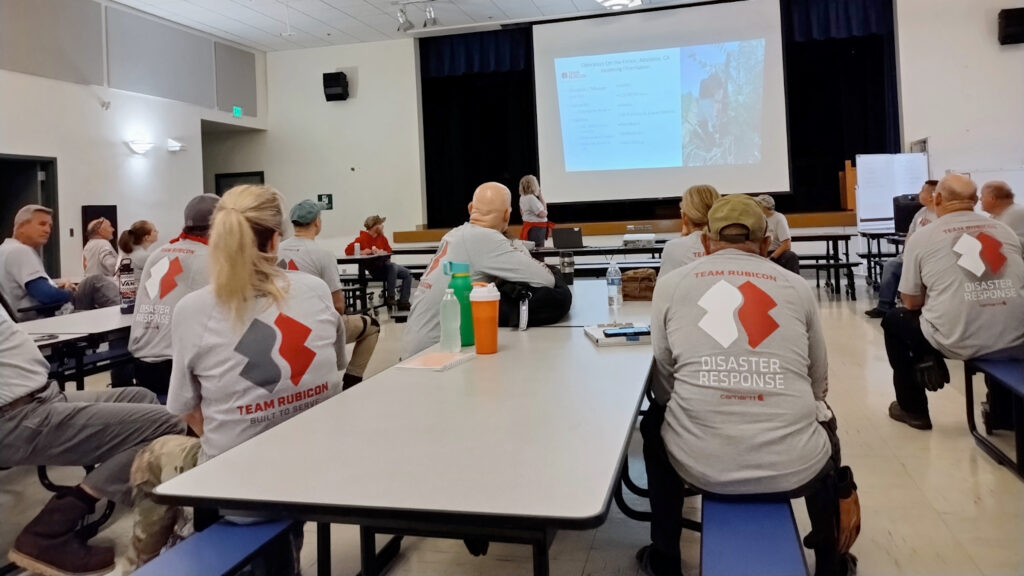
During our morning brief, we were given the purpose of our mission—to aid the Altadena community devastated by the wildfire—and the specific needs of volunteers were laid out. The command and general staff team, or C&G, set the tone for the entire operation. For me, the first half of the day was spent in a site survey class where we learned all of the essentials about how Team Rubicon meets with homeowners after a disaster, evaluates homes and properties damaged in a disaster, identifies if there’s work that needs to be done and is within TR’s scope, and more. It was the perfect bridge from my cognitive world of data to the hands-on work ahead.
Into the Command Center: My Mission in C&G
For most Greyshirts, the days after that kind of just-in-time training would be followed up with time in the field. I, however, had the incredible opportunity to spend the next two days working closely in the mobile command center with Papi Ramos, our operations section chief.
Given my background working with computers and handheld devices, I found myself comfortable during the site survey training working with TR’s field services handhelds, the devices Greyshirts use to record every small detail that needs repair or assistance at a disaster site. It’s from the info entered during a site survey that the work order is created, that then informs strike team leaders of their jobs. Those work orders are then divvied out to different disaster response volunteer strike teams based on the work to be done. So, I had approached Papi, the OSC, to see if I could be of any help working on those systems and running the show from behind the scenes. I was welcomed into the C&G team and tasked with coordinating work orders, a fascinating challenge that felt strangely familiar to my work with algorithms.
My role was to be the one point of contact between the command center and the strike teams on the ground. Using software and a phone, I communicated with strike team leaders as they were en route to or at job sites. It was a logistical puzzle, and it was deeply satisfying to see a plan come together. Even more importantly, I often had the chance to speak directly with affected homeowners, listening to their stories and reassuring them that help was on the way.
Out of the Command Center and Into the Field: A Volunteer’s Perspective
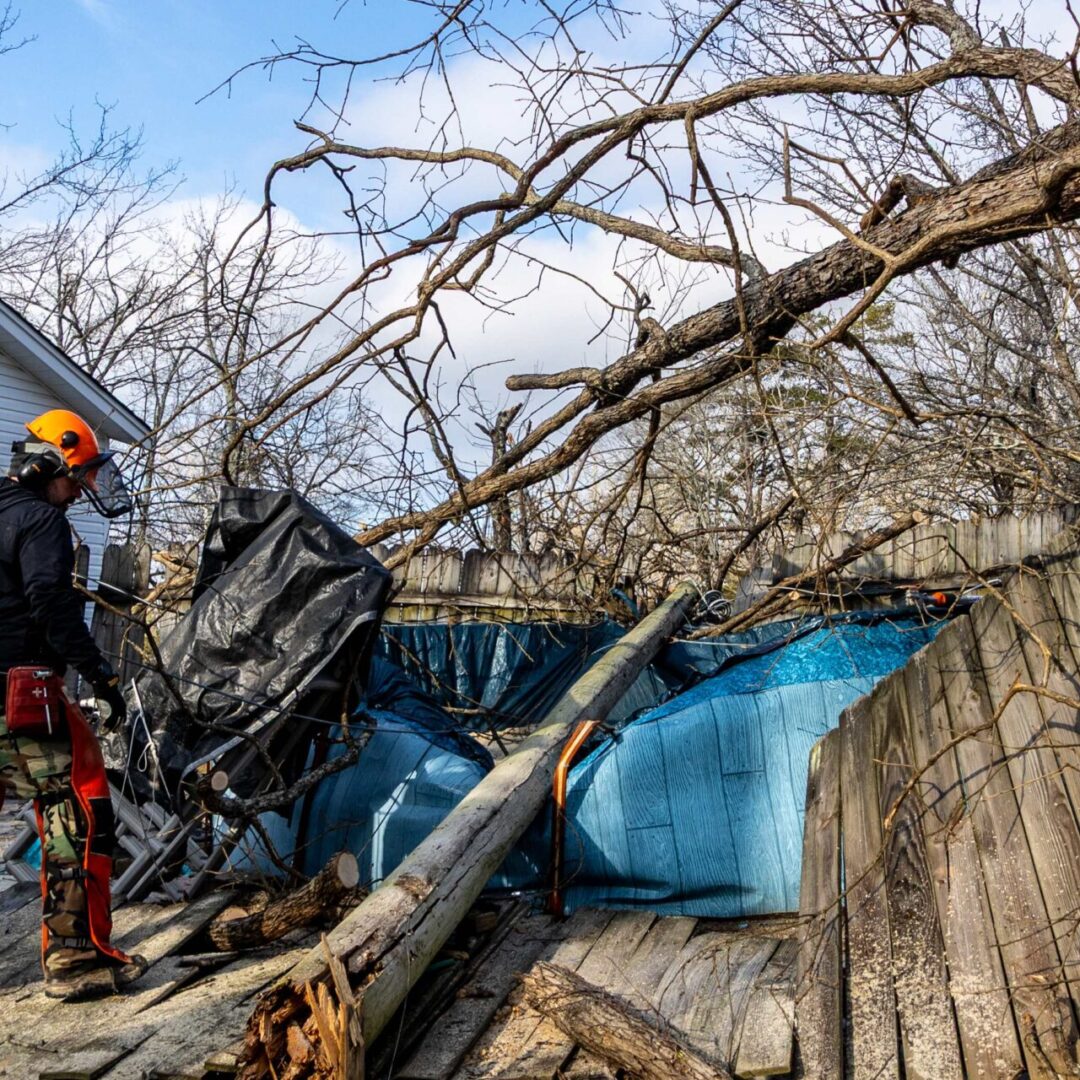
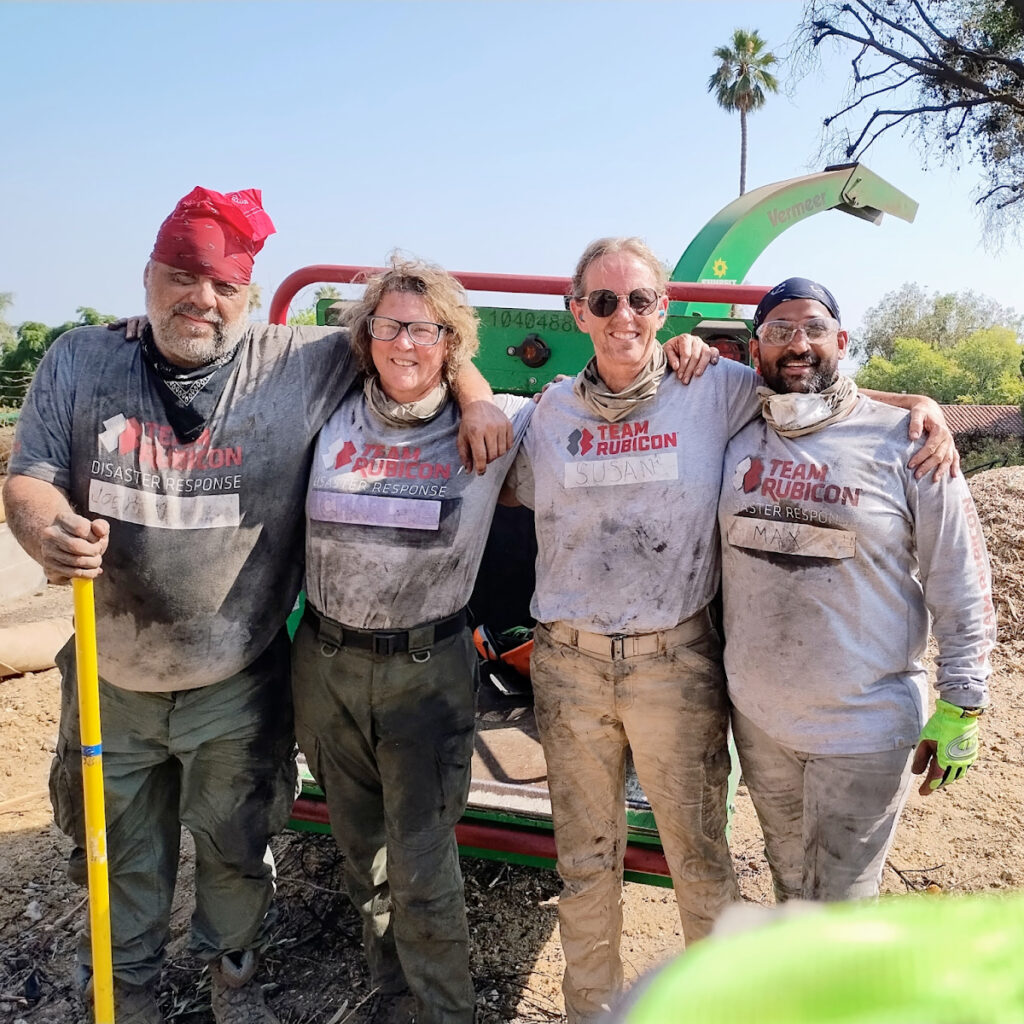
For the last two days on the operation, I had the opportunity to leave the command center and get dirty. Instead of building models and code, I was working with my hands, chipping vegetative debris that was burned or dead (and that could be tinder for a future fire) and installing fencing. It had been half a year since the Eaton fires, and the Altadena homes—what remained of them—and properties were sitting there unprotected. It was essential that someone install fencing to keep squatters out and prevent illegal dumping, so that’s what we did. The days were tough, but the feeling of doing tangible, meaningful work was an incredible reward.
Finding Community as a Disaster Response Volunteer
No part of this experience was more powerful than the people I served with. Beyond the visible work, there was an incredible support system that kept us going. Greyshirt Sarah Abyeta and her team tirelessly kept us well fed both at the FOB and when we were out in the field. The simple act of a warm meal after hours of hard work was a morale booster and a reminder that we were all part of something bigger.
Similarly, the mobile locker room team was an absolute blessing, providing much-needed showers and laundry facilities. Their dedication often goes unnoticed, but it is absolutely vital to the success and well-being of every disaster response volunteer.
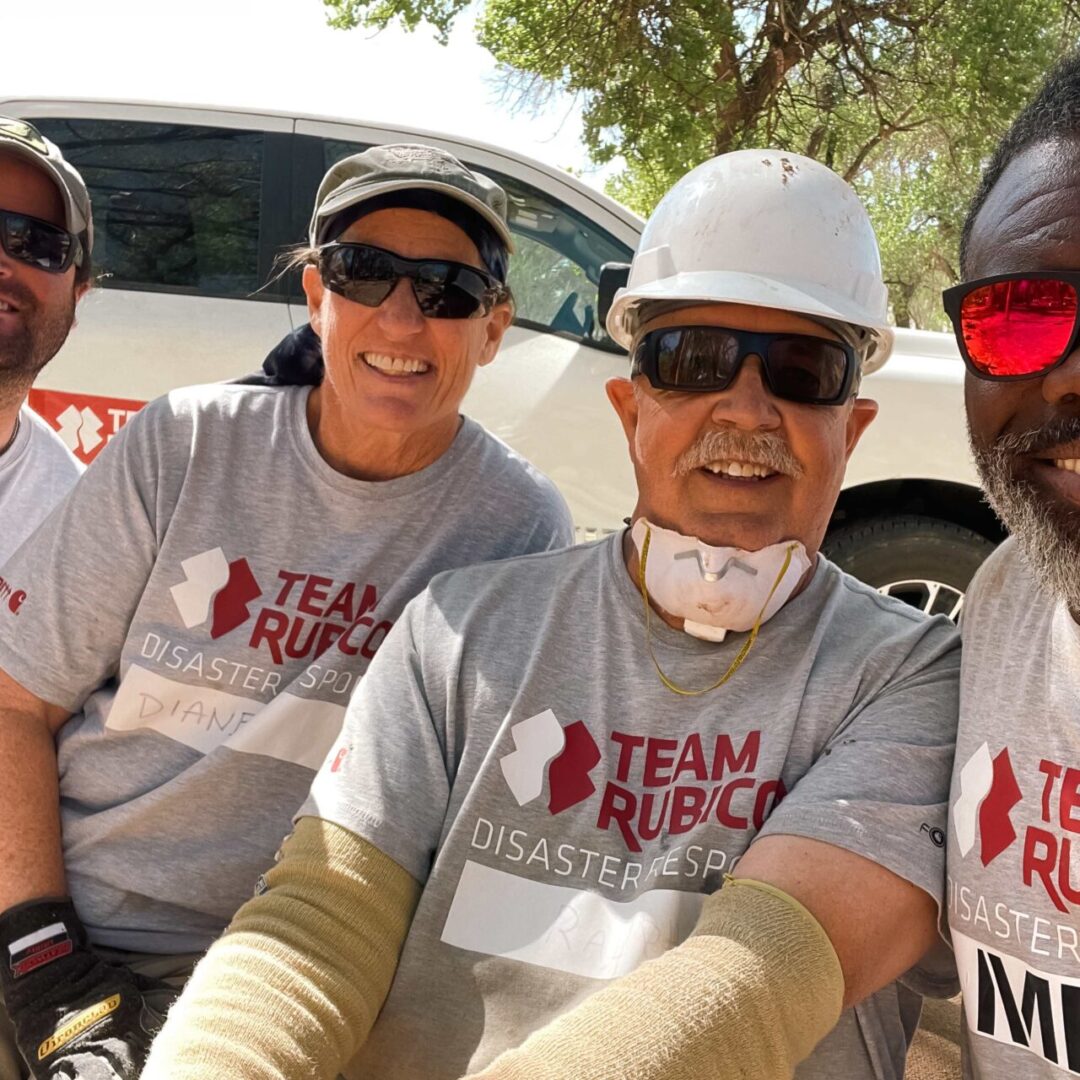
When I deployed on my first op as a Greyshirt, I came to help a community recover from those devastating fires, but then I found my own within the Greyshirt family. My team was called strike team Delta, and it was me, Charlene, Joey, and Susan. We still call our text group by that name today. I learned from every single volunteer I encountered, from the senior Greyshirt leaders to the crucial support of first time Greyshirts on operations like myself. I was well taken care of as a first-timer, embraced as an equal from day one. I know almost everybody on that operation, and I don’t think I’ll ever forget a single name or contribution.
Demobilizing from an Operation and A Promise to Return
During my time serving the Eaton fire survivors, I found that the work was hard, often exhausting, and profoundly satisfying. The feeling of making a tangible difference, of standing shoulder-to-shoulder with people who believe in the same mission, is something I will never forget. My experience taught me that while the algorithms I work with are powerful, the most impactful ones are often powered by human compassion and the simple act of showing up. I returned home changed, but also ready. I can say without a moment’s hesitation that I’d be ready for my next operation, without a second thought. My hope is that my story inspires you to find your own way to serve, and perhaps one day, to join the Greyshirt family yourself.