It’s 9/11, the 24th anniversary of the attacks on the U.S., and as I think about the significance of that day, I also can’t help but reflect back on where I was one year ago today, and the profound impact that day also had on me.
On September 11, 2024, I was deployed on Operation Curveball, Team Rubicon’s response to devastating flooding that happened in Western Connecticut in August of that year. The day, 9/11, hit close to home for me.
Like many Team Rubicon volunteers, or Greyshirts, I wore the uniform. A U.S. Army veteran, I enlisted after 9/11, and served up until a medical retirement. For a while after that retirement, it felt like any sense of purpose I’d had was gone.
But then I found Team Rubicon. While I was in Louisiana on my first op—Team Rubicon’s response to Hurricane Ida—I signed up for my second, which would be TR’s Afghan refugee resettlement at Camp Atterbury.
Just weeks before, the Kabul airport attack had taken 13 American lives, including that of Marine Corporal Humberto Sanchez. At Camp Atterbury, I met Sanchez’s parents, Coral and Alan. They invited me to his wake—an act of incredible grace amidst their grief. Coral even turned the wake into a donation drive for the Afghan children we were helping. After showing me the last video she had of her son, who was helping a young girl over a barrier moments before the explosion, she told me that her son’s mission in life was to help those children, and she was going to honor it.
We renamed our Forward Operating Base to FOB Sanchez, flew a flag in his honor, and at the end of the operation, presented that flag to his mother. It was a powerful moment, connecting us to his sacrifice and to the families we were serving.
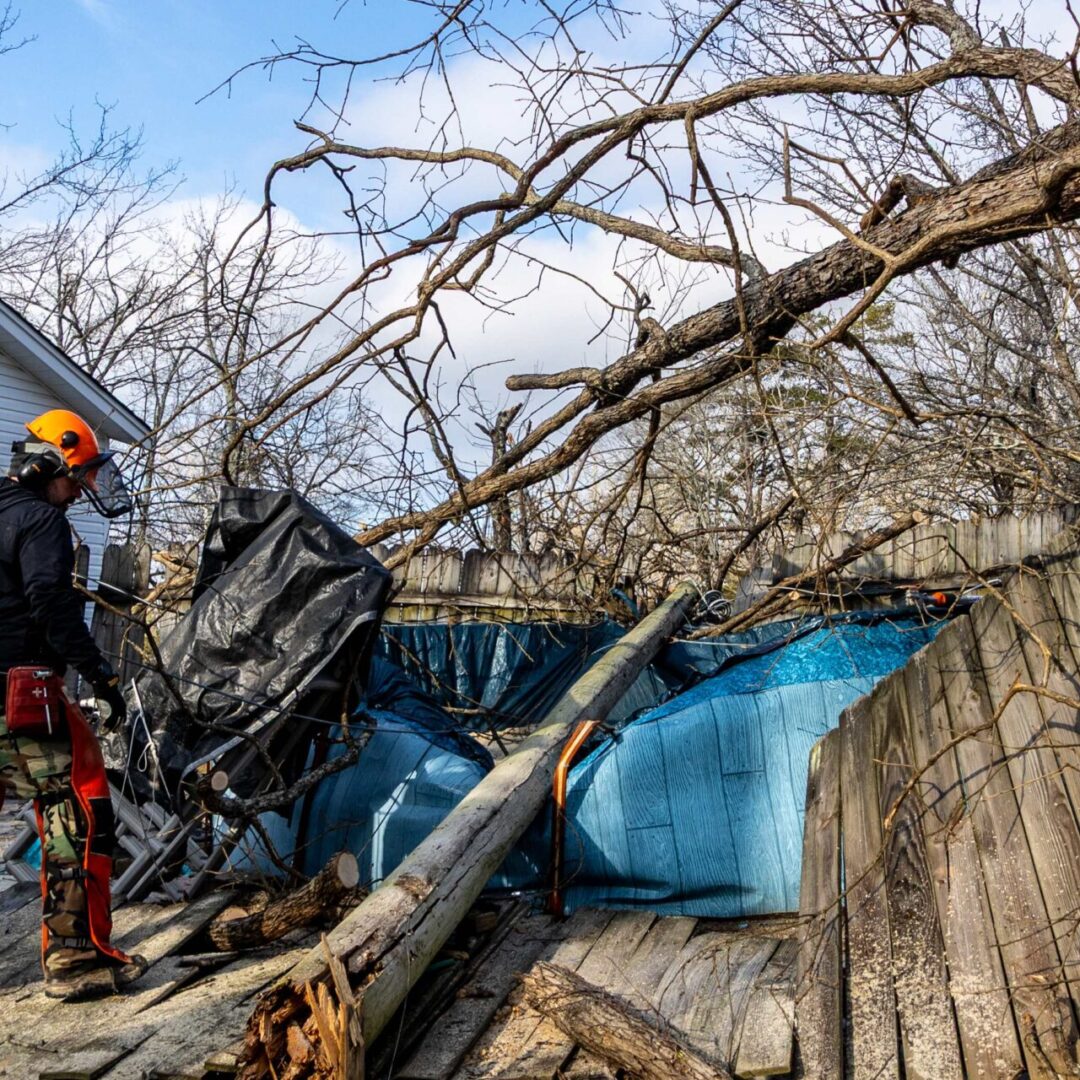
Fast forward to 2024, and I was deployed with Team Rubicon again, this time on a disaster relief operation. In August, Western Connecticut had been hit by a flash flood after 10 inches of rain fell in under 2 hours. It was devastating. Team Rubicon had already responded to the area once, but in September, another operation had been stood up to serve those we hadn’t been able to help the first time around. Now, I was among a slew of Greyshirts responding to the flooding in Connecticut.
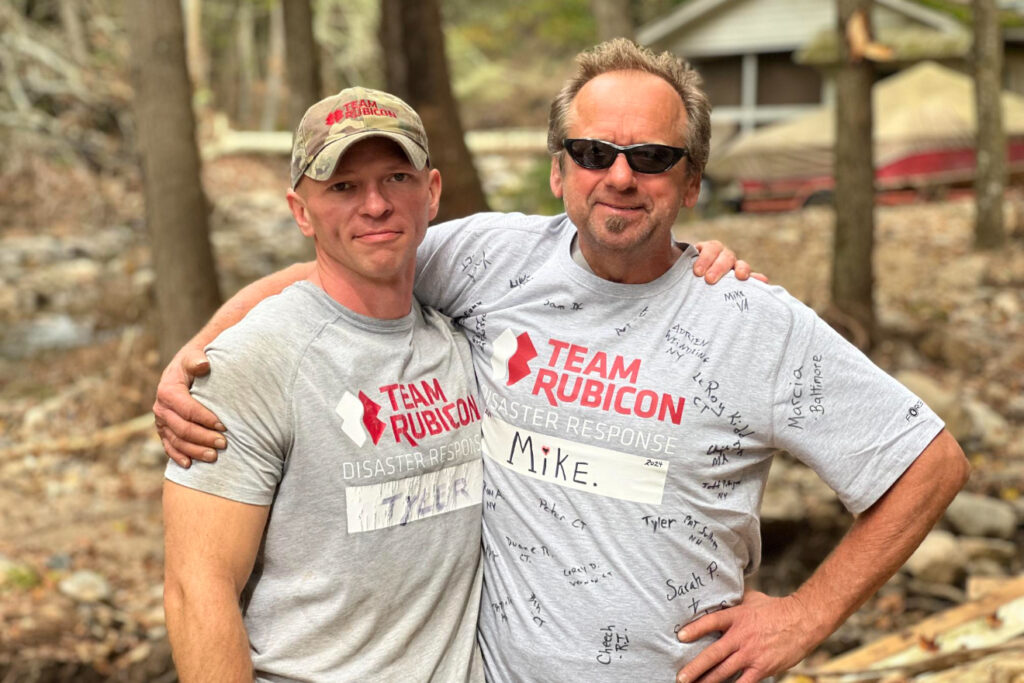
I’d already been in touch with a Greyshirt who had served on the previous operation, and he’d told me about a pair of homeowners the team hadn’t been able to serve—Mike and Jayne. The couple had a multi-acre property that, for years, Jayne had run a 9/11 survivor’s retreat on. It was how the two had met: Jayne ran the retreat, and Mike, a firefighter who had served on FDNY Ladder 8, had attended one such retreat.
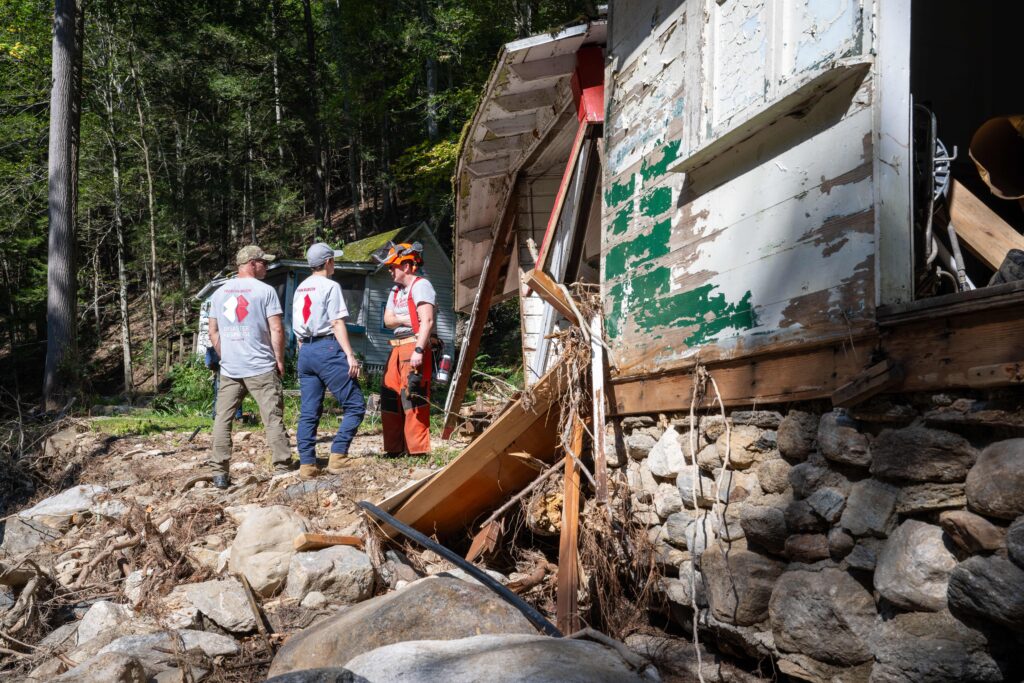
Now, that property was devastated as it had been buried under massive floodwaters. And we Greyshirts wanted to serve them.
Getting to the property wasn’t easy. The area was so messed up from the flooding that maps didn’t even lead to the house. I ended up hiking through the woods to find it, and ran into Mike along the way.
The property needed our help. Mike, the first responder who rushed to the scene and whose ash-covered, tear-streaked face had become an iconic image of 9/11, needed our help putting the place back together. So, that’s what we stepped up to do. In the process, I got a chance to know Mike better.
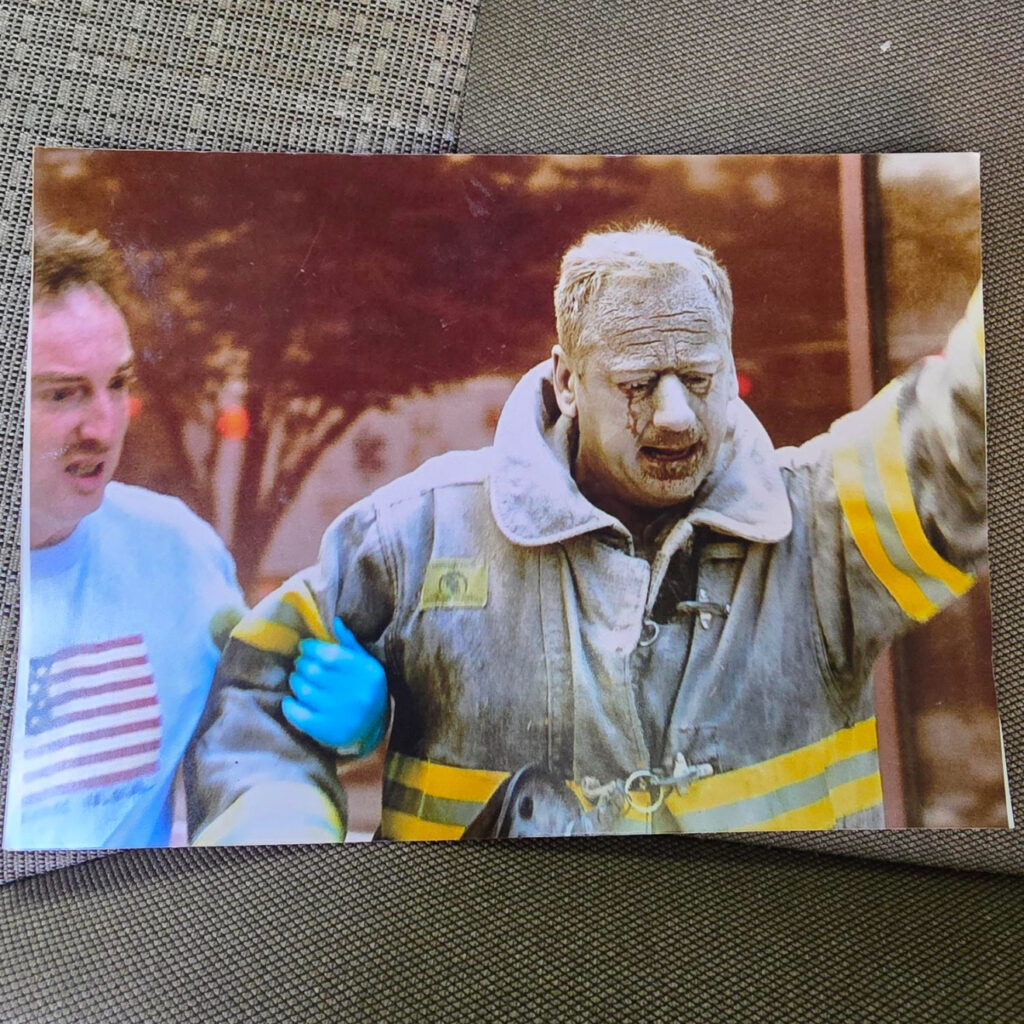
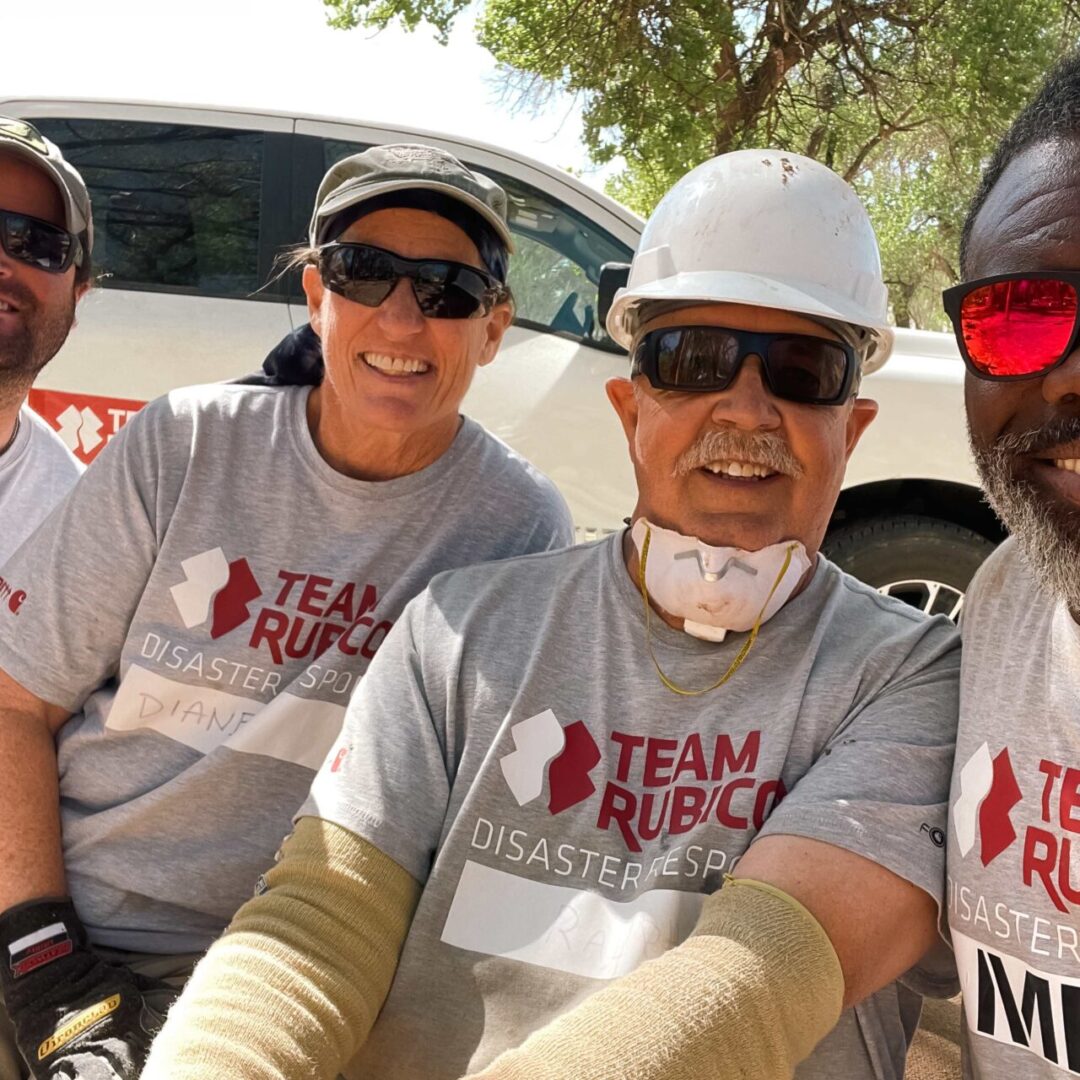
As I mentioned, I’m a veteran. During my time in the service, I spent four years in the Middle East and another one year in Guantanamo Bay. All were considered deployments in support of the Global War on Terror, although only four were combat tours. And while I wasn’t in Afghanistan, I was in Iraq. It all seemed like it’s part of the same overall war, you know? Which is probably why I felt this deep connection to Mike, and it made me want to help him in any way we could. The rest of the team all felt the same. We all wanted to help out. So, that’s what we did. Over the course of five days, our strike teams filled dumpster upon dumpster with destroyed items and flooding debris.
For me, it was a very full-circle moment. Here was a man who had rushed in the moment the towers were hit in Manhattan, the very event that had inspired me to serve in the military myself. Now, we were getting to give something back to him.
When we arrived, Mike seemed to have this attitude of—I don’t want to call it defeat, but definitely resignation. As if he’d die trying to fix the place up. It was clear he was feeling hopeless. But that all changed over our time there. By the last day there, he was showing me how his day began with 20 minutes of stretching, and that he could do head kicks. You can’t really do that if you feel hopeless. We even made him an honorary Greyshirt.
As I think back now on last year’s deployment, and this 9/11 connection I can’t tell you how grateful I am to be part of this team. You’ve all helped me bridge the gap between the life I had and the one I live now. I may not wear the uniform anymore, but thanks to you, I still get to serve. And that means the world.