
When the remnants of Typhoon Halong, which originally developed in the western Pacific, swept into Alaska as an extratropical cyclone in early October, it brought extreme devastation with it. Hurricane-force winds, record storm surge, and extensive flooding devastated entire communities. The catastrophic damage to communities of western Alaska—west of Anchorage, south of Nome, and north of the Aleutian islands—comes at a scale few have seen. Across the region, homes have been washed away, communities have been displaced, and infrastructure is crippled. Typhoon Halong is one of the worst Alaska disasters in recent memory.
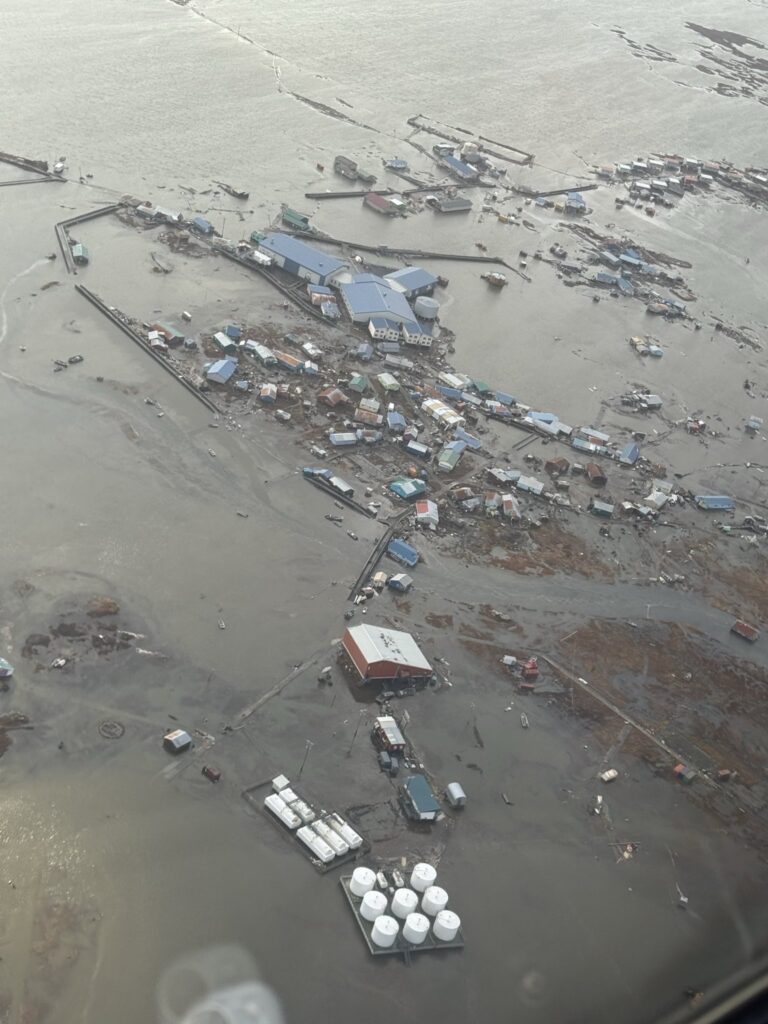
Already, 22 communities in Alaska have disaster declarations, including numerous Tribal communities, and a federal disaster declaration was approved October 22, 2025. In the village of Kipnuk, four miles from the Bering Sea, water levels rose about 6.6 feet above normal high tide. Officials describe the damage as “catastrophic,” saying every home was damaged and 90% of homes were destroyed, according to the Alaska Department of Transportation.
Remote and largely roadless, much of the region, including the Yukon-Kuskokwim Delta, comprises small, Alaska Native villages reachable only by air or water. Within those villages and towns, boardwalks—the main walking and vehicle path in most villages—have been uprooted, utility poles have been downed and the communication infrastructure damaged, and water and sewer systems have been severely compromised. The devastation is further compounded by the fact that the storm struck at a particularly vulnerable time, as remote villages face the onset of winter conditions and freeze-up.
In western Alaska, a domestic natural disaster has taken on international-style humanitarian crisis dimensions: More than 1,500 people have been displaced, evacuating to towns like Bethel or to Anchorage, 500 miles away. Officials warn that many evacuees won’t be able to return home this winter, due to the scale of damage and onset of harsh conditions.
Those able to remain in their communities face additional hardships. Numerous communities face the loss of subsistence resources: Freezers with stored fish, game, and other foods were lost or destroyed, and berry-picking grounds and traditional hunting trails flooded.
Recovery in the region is also hampered. The region’s remoteness means supply chains are slower, and getting emergency response to the region is more difficult than in most lower-48 communities. Delivering supplies, reconstructing homes, and restoring services will be significantly encumbered by logistics, cold weather, and isolation.
Per capita, the devastation is on par with that from Hurricanes Helene and Milton, if the attention to the disaster is far less.
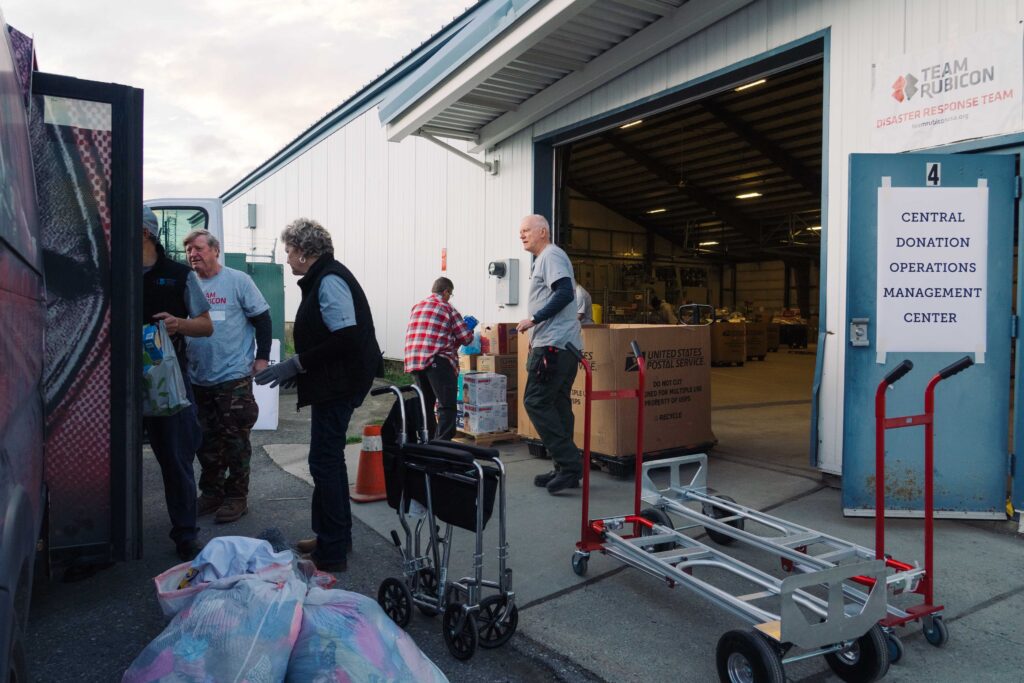
Currently, nonprofits like the American Red Cross, the Salvation Army, and the Alaska Volunteer Organizations Active in Disasters (VOAD), are feeding and sheltering survivors of the storm, while Team Rubicon is working with the Alaska State Emergency Operations Center, Alaska VOAD, and Alaska Native Tribal Health Consortium in Anchorage to provide donations management and logistical support, freeing up local resources and enabling local agencies and organizations to respond more efficiently the disaster. The veteran-led disaster relief nonprofit, which also responded to Typhoon Merbok in 2022, is also currently standing up a response that will be headquartered out of Bethel.


