When Hurricane Ian came ashore on Florida’s Gulf Coast on September 28 it brought with it massive storm surge and winds, and devastating losses across the state. While CoreLogic estimates insured losses from Hurricane Ian to land somewhere between $28 billion and $47 billion in Florida alone, those numbers don’t include the billions of dollars in uninsured losses residents in the state will face.
One week out, roadways remain covered in debris and homeowners and residents are faced with extensive damage and flooding, and the overwhelming question of where to turn as they try to recover.
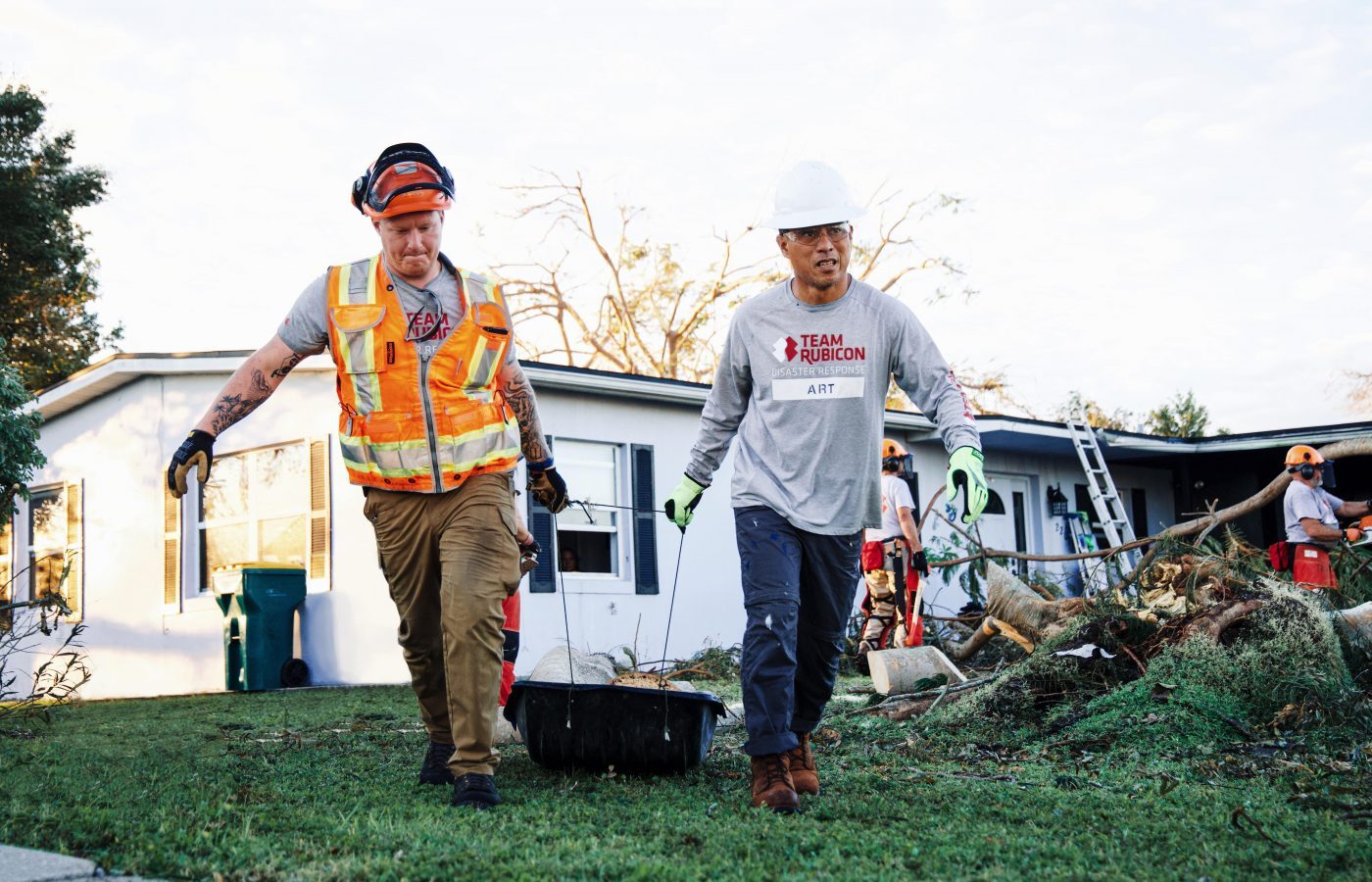
To meet those needs, Team Rubicon is sending hundreds of volunteers to help Hurricane Ian survivors with immediate recovery needs. Currently, nearly 100 Team Rubicon volunteers—or Greyshirts—are on the ground in the sunshine state clearing debris left by the storm, tarping roofs to protect against the weather, and more.
It’s just the beginning. Hundreds more Greyshirts will be deploying to Florida to assist with the hurricane response and recovery in the coming month.
Whether you’re new to disaster relief work or a longtime Greyshirt, here’s how to volunteer to help Hurricane Ian survivors in Florida. Plus, answers to some burning questions.
Become a Team Rubicon Volunteer
The very first step in volunteering to help with any hurricane relief is to become a Greyshirt.
Step 1: Register to Volunteer
Click here to register using your email address and phone number. We’ll also want a street address so we know where to deploy you from.
Step 2: Complete Your Deployment Profile
Once registered, you will receive an email with this link to create your deployment profile.
Step 3: Complete Your Background Check
Team Rubicon’s background check policy is to ensure a safe operating environment for our team members and the communities we serve. Background checks typically take 15 days to complete, but due to the urgent need to serve hurricane survivors, Team Rubicon is expediting the process as much as possible.
To complete your background check simply log in to Roll Call, click on your name in the upper right corner of the page, then click on the status of your background check.
Step 4: Complete TR101: Step Into the Grey
While awaiting the results of your background check (the status will read “In-Process”), take 40 minutes to complete TR101, Step into the Grey, Team Rubicon’s introductory training series that covers everything from the history of the organization to what to expect when you deploy.
To enroll in TR101, click on your name in the upper right corner of Roll Call, then click on “take it” next to TR101.
Step 5: Open that Text or Email and Register for an Operation
Once your profile is complete you will begin receiving texts and/or emails inviting you to deploy on operations. Simply click through to register your availability, then pack your Go Bag and prepare to deploy.
How Greyshirts Can Volunteer to Help With Hurricane Ian Relief
Already a registered Greyshirt? Pack your Go Bag, it’s time to serve Hurricane Ian survivors in Florida. Just register your availability here for our Hurricane Ian relief operations.
Volunteering FAQs
If I Volunteer to Help on Team Rubicon’s Hurricane Ian Operations Where Will I Serve?
Currently, Team Rubicon has launched responses to Hurricane Ian in Lee, Polk, and Charlotte counties, and is standing up operations in DeSoto and Volusia counties.
Do I Have To Be a Veteran to Volunteer for Hurricane Ian Relief with Team Rubicon?
No military experience is needed to become a Greyshirt. Team Rubicon may be a veteran-led organization, but anyone can serve.
If I Volunteer for the Hurricane Ian Disaster Response in Florida, What Will I Do?
Currently in Florida Greyshirts are removing vegetative and non-vegetative debris (think moving uprooted palm trees and all those above-ground pools that went airborne), assisting with expedient home repair, mucking out flooded homes, and helping tarp roofs.
If you’re volunteering to help Hurricane Ian victims, prepare to haul, drag, mop, muck, demolish, and remove debris. You’ll love it.
Do I Have To Be Vaccinated to Volunteer in Florida?
Yes. In order to deploy on any operation, volunteers must have at least two doses of the COVID-19 vaccine.
As you complete your profile in Roll Call, you’ll see several sections on the left menu bar that need your attention. One of those is your COVID-19 vaccine information. Please provide this information if you want to serve in Florida.
If I Volunteer in Florida, Do I Need to Buy My Own Plane Ticket or Gas To Get to the Operation?
Volunteers who live more than 450 miles from Team Rubicon’s Hurricane Ian operations in Florida will be deployed on flight waves, and Team Rubicon will provide the plane ticket. Do not buy your own airfare. Flights are either donated by an airline or purchased by our Mobilization Team. All you have to worry about on deployment day is your Go Bag.
If you’re within driving distance of an operation, Team Rubicon will offset the cost of your mileage.
Do I Need Health Insurance To Serve in Florida?
Yes. Team Rubicon requires Greyshirts to carry health insurance before deploying for an operation of any kind (resettlement, mitigation, response, or recovery). Disaster response and prevention can be risky. The best way to protect yourself during an operation is to make sure you can access emergency healthcare when you need it.
How Long Will I Serve?
Currently, Team Rubicon is deploying volunteers to Florida for full-week stints through the end of November, with flight waves currently set for Friday to Friday, Saturday to Saturday, and Sunday to Sunday. In mid-October, it will also launch some five-day, work-week deployments.
Before you sign up for an operation, make sure that you’re available for all of the days outlined so that we can plan our mobilization efforts as quickly as possible.
If you are local to an operation or a driver who is deploying from within 450 miles, you may serve on an operation for as little as one full work day.
There Are Multiple Operations Going On, How Do I Know Which One to Choose?
We will have the status of the operation in the details on the registration page and will keep that up-to-date with how far out we are looking for support. If you are under 450 miles from one or more operation, then register for the ones you would be willing to deploy to. If you are more than 450 miles from some or all of them, register and select the availability of the flight waves you’ll be willing to serve on.
We strive to deploy drivers to the operation they are most local to, and flyers to the operation where they are most needed. We will prioritize getting you out to the operation you register for, but we may ask you to deploy to another location if there is unmet need you could potentially meet.
How Long Before I’ll Know if I’m Deploying on an Operation?
While it may take a few days to determine if you fit into the next deployment wave, you will receive confirmation of your deployment at a minimum of 48 hours before your first listed day of availability.
I Registered to Volunteer for an Operation, Now What?
If you are registered for an operation and have future dates, stand by and wait for an email/text from Team Rubicon asking you to reconfirm. If you don’t get that before the first dates you registered for, please use the same registration link, go to your “Registration Page,” and update your availability for future dates of the operation.
After you get, and respond to, a request to reconfirm for an operation it is 90% certain that you are going to get dispatched. If flying to the operation, it’s at this stage that the Mobilization team selects and adds flights to your registration in preparation for dispatch. This could take up to 72 hours depending on the source of the flights. If driving, the dispatch should come within 24 hrs of reconfirming you are available to deploy.
I Require Special Accommodations, Am I Still Eligible to Deploy?
Due to the nature of disaster response, many of our operations take place in austere conditions. Right now in Florida and Puerto Rico, we don’t have a reliable source of electricity—much like the people we are serving. At this time, that prohibits us from deploying Greyshirts who require CPAP devices or refrigerated medications. It could also prevent us from accommodating special diets. When in doubt, read the details in the event descriptions before registering for an operation. We will keep that up-to-date regarding the current conditions related to electricity. You may also email [email protected] with any questions. If your accommodation is not addressed in the event description, we will reach out to the command team on the ground of the operation to see if they can accommodate your needs.


